




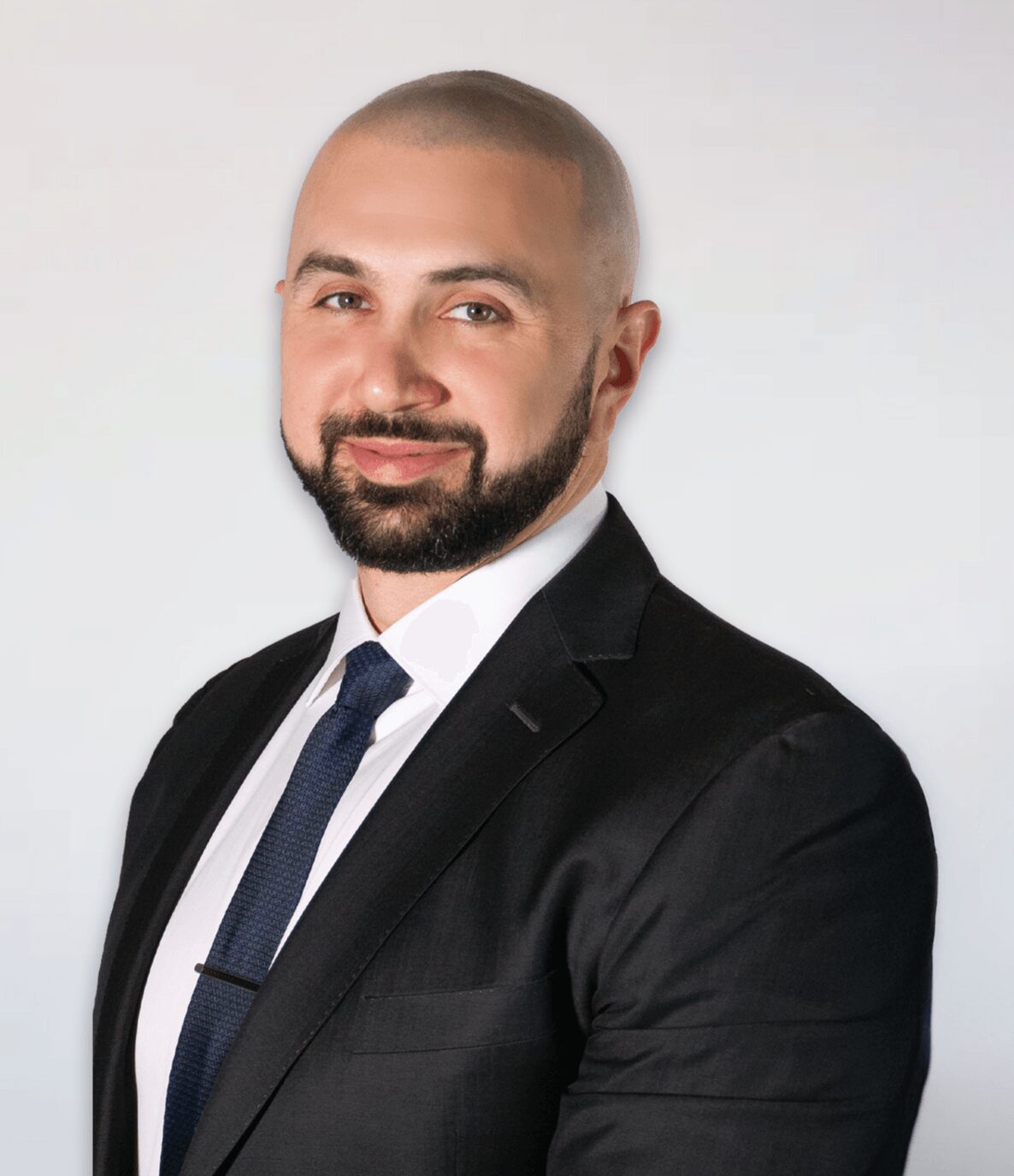
Alex Safarian shared their story and experiences with us recently and you can find our conversation below.
Alex, really appreciate you sharing your stories and insights with us. The world would have so much more understanding and empathy if we all were a bit more open about our stories and how they have helped shaped our journey and worldview. Let’s jump in with a fun one: What’s more important to you—intelligence, energy, or integrity?
Integrity.
I define it differently than most people. It is not just about honesty or morality. It is about honoring your word. You are your word. That means giving it carefully, keeping it, and if something changes, communicating immediately and taking responsibility for the impact.
Even a small break in an agreement can disrupt how things function. In my world, your word has to mean something. When you commit to something, you follow through. If circumstances shift, you address it directly and clean it up. That creates trust and consistency, which are the foundation of any high-performing team. I see the impact of that every day in my firm.
Intelligence and energy matter, but integrity gives those qualities their strength. Clients rely on more than our legal skill. They rely on our dependability during some of the most stressful moments of their lives. Integrity is what allows clients to feel safe and allows my team to operate with confidence.
It is the single quality that makes everything else work. That is why it is the one I value most.
Can you briefly introduce yourself and share what makes you or your brand unique?
I am the co-founder and Managing Partner of Block Law, a plaintiff-side injury law firm, based in Los Angeles that focuses on serious injury and tenant habitability cases.
What makes our firm unique is the level of intensity and care we bring to every client. No client is just a number. They are human beings. I know most of our clients personally. I pick up the phone and speak with them, invite them to come visit and meet the team. People come to us when they have been injured or when their living conditions have failed them, and they need a team that will fight for them at the highest level. We really build our cases around the human story and how our client’s lives have been affected by someone else’s negligence. We have built a culture that combines aggressve advocacy with a real commitment to client experience, and that combination has fueled our growth.
I always wanted build something that feels different from a traditional law firm. We are not your average old and dusty law firm. We operate more like a tech company than a typical legal practice. We highly leverage AI and other cutting edge tools to bring a level of intensity and care to every client that most firms can’t match. We track our data, we train constantly, and we invest heavily in leadership, systems, and innovation. Our long-term vision is to redefine the modern law firm experience and something we work toward every day.
I am proud to say that we were recently named one of the “Most Admired Law Firms to Work For” in Los Angeles, up there with some of the biggest names in the industry.
Alongside the firm, I am also building a consumer-facing legal tech company designed to give people access to reliable legal tools and guidance in a way that is simple and private. The goal is to give more people access to lawyers. Like a law firm in your pocket. It is an exciting project because it lets us help people at a much broader scale.
Everything I do centers on one theme. Build great teams, deliver great results, and constantly push the boundaries of what a modern legal organization can be.
Amazing, so let’s take a moment to go back in time. What breaks the bonds between people—and what restores them?
Bonds between people usually break when expectations go unspoken, promises go unkept, or communication shuts down. Most fractures do not come from one dramatic moment. They come from small breaks in trust that go unaddressed. A missed commitment that never gets acknowledged. A conversation that should have happened but didn’t. People start assuming instead of asking, and distance forms.
What restores those bonds is direct, honest communication and taking responsibility for your part in the breakdown. When someone owns what happened without excuses and is willing to clean it up, something shifts. Trust starts to rebuild. People feel seen again. The relationship becomes workable and often stronger than it was before.
In my experience, the real glue between people is clarity, consistency, and the willingness to repair things quickly when they slip. When those three elements are present, relationships stay strong even under pressure.
What did suffering teach you that success never could?
Success can make you confident, but suffering makes you honest. When everything falls apart, you are forced to look at what is real, not what you want to believe. You learn where your blind spots are. You learn who you can count on. You learn the difference between ambition and discipline. Those lessons stay with you because they are earned, not handed to you.
Hitting rock bottom also teaches resilience. When you rebuild from nothing, you stop fearing failure. You understand that you can take risks, lose everything, and still come back stronger if you are willing to learn from the mistakes. That realization is powerful. It gives you a sense of freedom that success alone cannot provide.
Suffering also teaches humility. It reminds you that growth is not linear and that the people who appear strongest are often the ones who have overcome the most. It sharpens your empathy and your ability to lead because you understand struggle firsthand.
Every time I failed, I became more grounded, more self-aware, and more prepared for the next chapter. Success can show you what is possible, but suffering shows you who you are and who you are surround with.
Alright, so if you are open to it, let’s explore some philosophical questions that touch on your values and worldview. What do you believe is true but cannot prove?
I believe that nothing is random. I cannot prove it, but I have seen too much in my own life to think everything is just coincidence. The world looks chaotic on the surface, yet when you pay attention, there is a structure to it. Whether it is a stretch of perfect days, major political shifts, the growth of a city, the formation of something as small as a crystal, or even the ups and downs of our own fortunes, there is an underlying order that ties it all together.
Even what we call unpredictable, like the behavior of electrons, follows patterns. There is a precision to the universe that is hard to ignore. At the same time, there is room for choice. People wake up when they want. They choose the route they take. Snowflakes fall where they fall. It seems contradictory, but to me it makes sense.
I do not see life as predetermined. I see it as already complete in a way we cannot fully process. Everything that has happened, everything that is happening, and everything that will happen exists within one larger picture. We only experience it in pieces because our minds work in a linear way. What feels like time passing is really just our way of breaking down something too vast to understand all at once.
If you could step back far enough, you would see that the universe is whole right now. Nothing is unfinished. Every event, no matter how small, is connected to every other. People you lose come back into your life in new ways. Moments that seem unfair make sense later. What feels random or unjust becomes clear when you see the full picture instead of one moment at a time.
I believe that nothing is accidental. Life has a cohesion we often notice only in hindsight, and there is beauty in that design.
Okay, we’ve made it essentially to the end. One last question before you go. Could you give everything your best, even if no one ever praised you for it?
I absolutely believe in giving everything my best, even if no one ever acknowledges it.
One of the simple principles I live by is what people call the shopping cart theory. No one rewards you for returning a shopping cart. No one watches you do it. It does not earn praise or points. You do it because it is the right thing to do. That small act says a lot about a person. It reflects who you are when no one is evaluating you.
For me, that idea carries into every arena of my life. I give my best effort whether the world notices or not. I do it because it aligns with my standards and the kind of person I want to be. My work, my relationships, and my leadership are all built on that internal commitment. External praise is nice, but it is not what drives me. What drives me is knowing that I showed up fully, that I honored my word, and that I acted with integrity even when no one was keeping score.
There is real fulfillment in that. It builds confidence, consistency, and self respect. It creates a foundation you can rely on when things get difficult. Giving your best only when people are watching is performance. Giving your best because that is who you are is character. That is the standard I hold myself to.
Contact Info:
- Website: https://www.blockllp.com
- Instagram: https://www.instagram.com/block_llp/
- Linkedin: https://www.linkedin.com/company/block-llp/
- Twitter: https://x.com/Blockllp
- Facebook: https://www.facebook.com/blockllp/
- Yelp: https://www.yelp.com/biz/block-law-burbank?utm_campaign=www_business_share_popup&utm_medium=copy_link&utm_source=(direct)
- Youtube: https://www.youtube.com/@BlockLawFirm
- Other: Google:
https://share.google/v4SpXXBUnoBM22Ons
TikTok:
https://www.tiktok.com/@blockllp

Popular
-

Portraits of the Valley
-

LA’s Most Inspiring Stories
-

Rick Norris Learned That Building a Successful Business Means Building a Life You Actually Want to Live
-

How Olivia Rush Turned Survival Into a Mission to Help Others Keep Going
-

How Bibi Goldstein Is Helping Entrepreneurs Reclaim Their Time by Embracing the Power of Delegation
-

Victoria Hasson is Redefining Voice Coaching Through Community and Collaboration


