




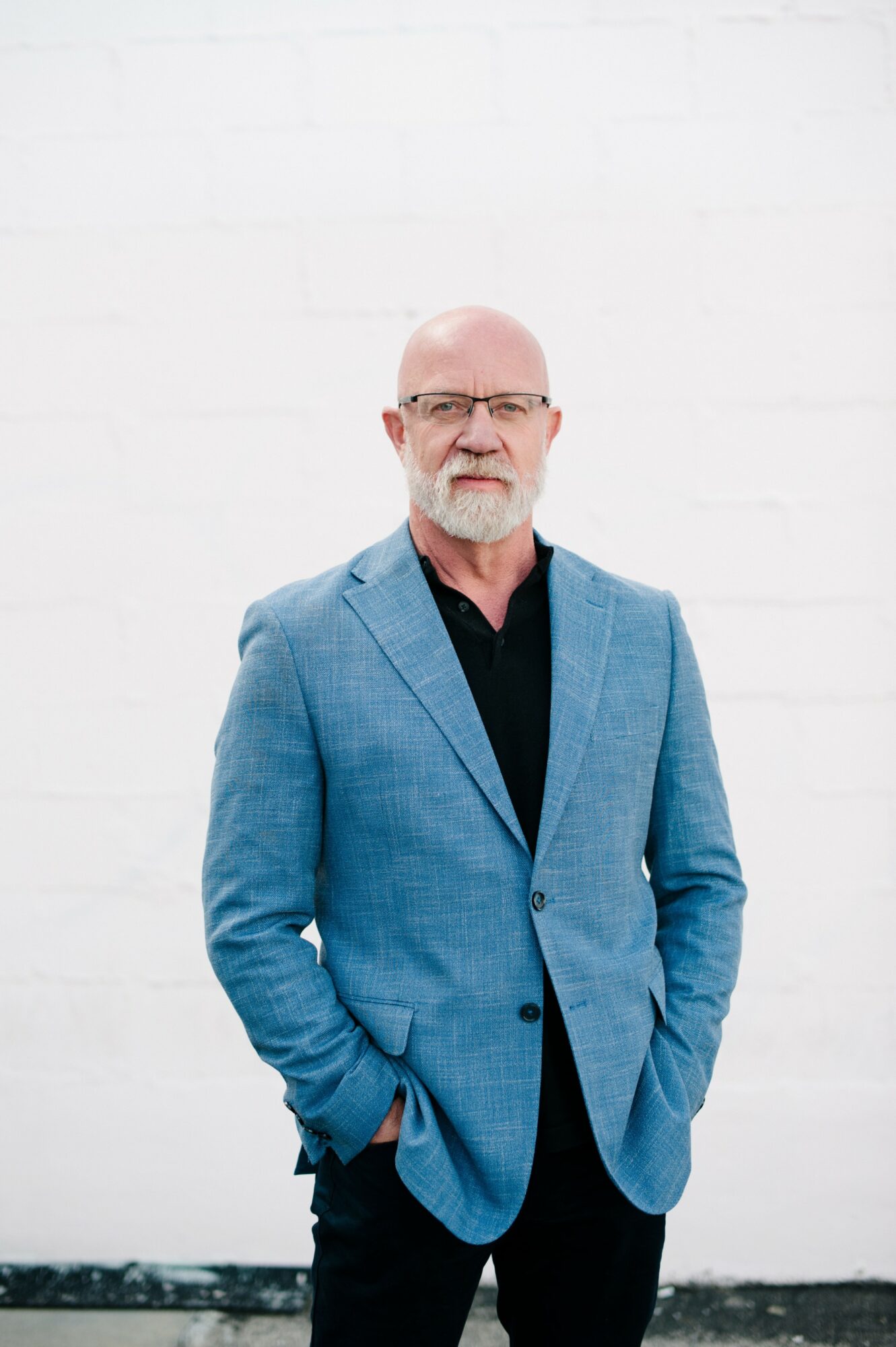
Today we’d like to introduce you to Dave Stroud.
Hi Dave, so excited to have you on the platform. So before we get into questions about your work-life, maybe you can bring our readers up to speed on your story and how you got to where you are today?
I started out as a singer. I wanted to be a rock star – I mean who doesn’t, right? I grew up in Southern Utah and was obsessed with music. Bands like Toto, Journey, Led Zeppelin, Aerosmith, Tears for Fears and artists like John Denver, Cristopher Cross, Peter Gabriel and others were my sanctuary. I LOVED music and just wanted to be in a band and sing. On a side note, the first concert I attended was Journey and Brian Adams at a show in Provo Utah, and it was transformative and massively inspiring for me. Later in my career, I ended up on the road as a voice coach for Arnel and Journey – kind of a full circle moment.
But something happened on the way to the Greek, so to speak. I found out I liked teaching more than trying to be a rockstar. This wasn’t something I had anticipated, but I was doing some teaching while also playing in bands, and somewhere in the mid 90s I had a realization that I could see myself teaching the rest of my artistic life, rather than working towards being a performer. I made a conscious decision to put all my energy into understanding the voice and helping others reach their goals.
I became someone who was deeply curious about why the voice works when it works, and why it falls apart when it doesn’t. What began as curiosity eventually turned into an obsession with understanding technique, artistry, psychology, and communication. I trained under Seth Riggs, eventually became CEO of Speech-Level Singing – a worldwide educational system for voice coaches and a certification program. And, I personally helped certify hundreds of teachers around the world.
From there, I launched VocalizeU, a 10-day summer intensive for singers, co-founded Vocology in Practice (ViP) – a network for voice teachers who have the desire to learn from each other, and built SingPro – an interactive vocal-training app used by singers and coaches around the world.
I’ve spent the last 7 or 8 years meeting monthly with Ingo Titze and Brad Story, two of the leading vocal researchers and scientists, and these sessions have helped me understand the invisible elements of how and why the voice works the way it does. It’s fascinating AND never-ending. There are always new things to learn about how the singer and the voice function. Being curious is the key for me to keep enjoying what I do. I keep studying and learning as a student and it makes me a better teacher.
I think my passion for helping others opened a lot of doors, and along the way, I worked with artists from every level — from kids figuring out their first belt note to icons like, Cee Lo Green, Adam Lambert, Olivia Rodrigo, Natasha Bedingfield, Michael Jackson and so many other high profile singers.
All of this — the teaching, the tech, the artists, the learning — has shaped the coach I am today: someone who loves developing raw talent, helping artists discover who they are, and using the voice as a doorway to something deeper and more human.
Can you talk to us a bit about the challenges and lessons you’ve learned along the way. Looking back would you say it’s been easy or smooth in retrospect?
The challenges haven’t always been entrepreneurial. Some of the hardest moments were deeply personal — and taught me more about the power of music and community than any business venture ever could.
One of the most meaningful experiences of my life involved my father-in-law, Jim, who was living with us due to advanced stage Multiple Sclerosis. He was unfortunately bedridden with some serious health complications. Jim always had a positive attitude and a great sense of humor despite all the hardship he faced, but we couldn’t ignore the fact that his health was declining.
During a lesson, Steve Perry — yes, the legendary Steve Perry — said something that changed everything:
“Let’s work on getting Jim strong enough to make it to the Giants vs. Dodgers game on Father’s Day.”
This came directly from Steve’s heart. He heard about Jim and he wanted to make a difference. No other motivations. It was kindness, plain and simple. When I told Jim about Steve’s invite, something lit up inside him. Like Steve, Jim was a huge Giants fan. If anything could motivate him to get back in his chair, it was one more day at the ballpark to watch his Giants take down the Dodgers.
The next day Jim sat up for five minutes in his wheelchair. Then longer. Then longer. Within a week, the house was filled with the sounds of effort — the mattress creaking as he pushed himself upright, the beep of timers marking his progress, the whispered encouragement from all of us. Two days before the game, Jim sat up in his wheelchair for eight hours straight.
He made it to that Giants game on Father’s day. He had never watched a game from a luxury box before… When we rolled into Steve’s suite, Jim looked around — at the green field, the energy of the crowd, the incredible view — and with pure wonder whispered:
“I didn’t know people watched baseball games on carpet..?!”
That day brought us all real joy — and in my heart, I know it bought him two more years of life. It meant the world to all of us.
On one end of my career is that experience — the profoundly talented, humble and generous artistry embodied by someone like Steve Perry.
On the other end is my time coaching on Netflix’s Pop Star Academy: KATSEYE, from which the girl group KATSEYE was created. This experience was very different. A world shaped by big platforms, significant budgets, and the polished illusions that large productions often lean on.
Those two experiences sit side by side in my memory — one reminding me of what this work can be at its most meaningful, the other reflecting the broader industry forces that can sometimes overshadow the heart of the craft.
Both shaped me. Both taught me. One changed me.
Appreciate you sharing that. What else should we know about what you do?
A lot of people call and ask if I only work with celebrities. My answer is always the same – my heart is in teaching and the process of helping an artist find themselves and get from point A to point B, point B to C and on… My only requirement is that my clients put in the work. I’d much rather work with an unknown artist who is hungry to transform, than a celebrity who isn’t interested in change or growth.
I’m a vocal coach, but the voice isn’t just an instrument, good singing is the process of connecting emotion to music. Helping people understand themselves through their voice and finding what makes them unique, different and sometimes awkward, that’s what makes us fascinated with a good singer. I work with artists on technique, of course — vocal efficiency, range, stamina, stylistic control — but my deeper specialty is helping singers connect the technical with their emotions and artistry.
I’m known for integrating four pillars: science, instruction, coaching, and psychology. You can’t separate them. The voice is human.
I’ve worked with artists across genres — pop stars, rock legends, musical theatre performers, K-pop idols, film and TV actors. Some big names, some rising stars, some complete beginners. I love them all equally because the process is the same: find the truth in the voice, then build the technique to support it.
What I’m most proud of isn’t the résumés, though those are fun. It’s moments where a singer realizes, “Oh, that sound is really me.” Those breakthroughs — the emotional ones — feel like tiny miracles.
And honestly, what sets me apart is that I actually love the messy middle. I love the fear, the resistance, the mental blocks, the “I can’t do this” moments. That’s where the gold is.
Are there any important lessons you’ve learned that you can share with us?
There’s not one lesson that stands out above the rest. But here’s a few that come to mind:
No “one person” has all the answers. Knowledge is a smorgasbord, you take from different mentors as you need it. This applies to both the clients I work with and ME. I need to keep looking around the educational world and keep learning from those that are willing to offer their knowledge. I’ve learned to take what makes sense to me and come back for more when the time feels right.
Any decision you make out of ego is most likely wrong. It’s difficult to see it in the moment – the ego is tricky. To understand it more read, Ego: The Ghost in Your Machinery by Richard Cox.
You know more about who you should be as an artist than any label, manager, agent etc. Trust your instincts and stick with it. You can listen to others for advice but make your own decisions.
There’s no replacement for consistency in work. Talent is 10%. The other 90% is doing the work.
I could list many more, but those would be my top 4.
Technique matters. Discipline matters. Opportunity matters. But none of it works if the singer doesn’t feel safe enough to explore, fail, stretch, and express who they really are.
My job is to create that safety — through clarity, encouragement, honesty, and the kind of relationship where an artist feels deeply seen. When singers feel safe, their voices open up. Their artistry expands. Their careers shift.
And the big lesson? That the work we do — whether it’s coaching a global superstar or helping a young kid find their first strong note — can create ripples far beyond music. It can change confidence, identity, direction, and sometimes, like with my father-in-law, even extend life in ways we never expect.
At the end of the day, I’ve learned that the voice isn’t just sound. It’s a map of the human experience. Helping someone discover theirs is the greatest privilege of my career.
Contact Info:
- Website: https://DaveStroud.com
- Instagram: @dsvocalstudio
- Facebook: https://www.facebook.com/dave.vocalstudio
Popular
-

Peter Joseph is Proving That Trust, Not Pressure, Builds a Lasting Business
-

Jillian Lapedus and Carolyn McGuire is Redefining What It Means to Grow Stronger With Age
-

LA’s Most Inspiring Stories
-

Portraits of the Valley
-

Dr. Misha Kouzeh, MSc, EdD Wants AI to Spark Better Questions, Not Just Faster Answers
-

Pamela Maria De La Luz Is Proving Great Tequila Can Also Change Animals’ Lives


