



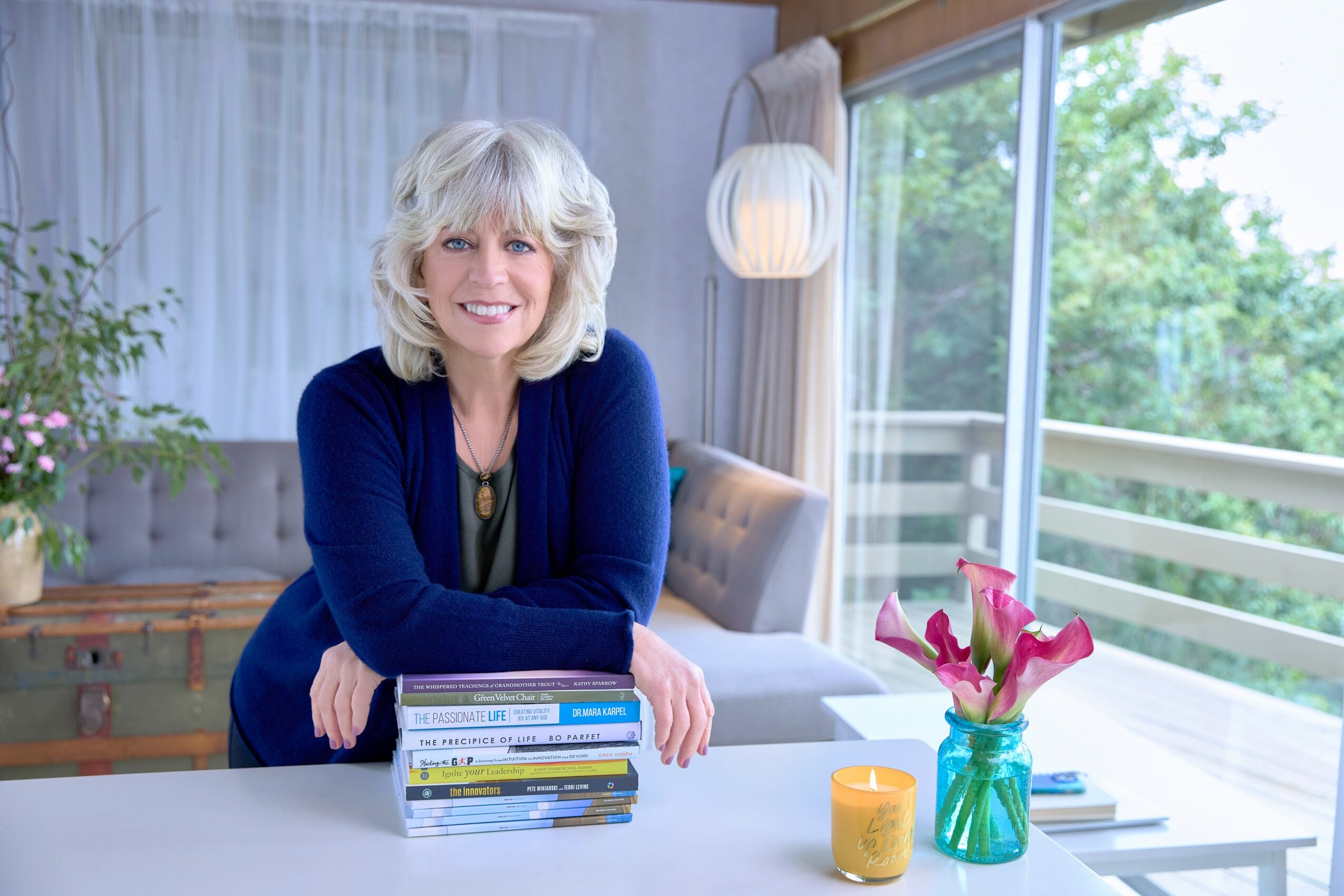
Today we’d like to introduce you to Kathy Sparrow.
Hi Kathy, we’re thrilled to have a chance to learn your story today. So, before we get into specifics, maybe you can briefly walk us through how you got to where you are today?
The call to be a writer has been with me since I was eight years old. I have always loved books and spent hours in the hammock during summer vacations reading Marguerite Henry’s “Misty and the Chincoteague Pony” series and “Seventeen” magazine. On Saturdays, my Aunt Veen and I would go to the library, and I’d bring home as many books as I was allowed. The Scholastic Book Fair was a highlight of my elementary school days. My mother always made sure I had money for a book or two. I’d also journal and write stories that no one saw. Words were my world, my happy place.
When I was entering high school, my guidance counselor asked what I wanted to be when I “grew up.”
I responded, “I want to be a writer, and I’m interested in the theatre.”
He removed his wire-rimmed glasses from his round, portly face, his bald head glowing from the overhead fluorescent light. Peering at me, he said, “You’ll never be a writer.” He didn’t even address the theatre.
I felt my life force dim as I sank into the hard oak chair in front of his desk, staring at the file folder with my name on it. My mother, sitting next to me, said not a word in my defense. My dream of being a writer faded that day and almost disappeared forever as I pursued the business path he set forth for me.
Thankfully, the call to write never left, and I began writing with intention in my early twenties. I returned to college, this time in a liberal arts program, and one of my professors, Pam Schmonsky, encouraged me to write about my Aunt Veen. I penned a piece about how she taught me to knit with pink knitting needles when I was five years old.
A short time later, I wrote an essay about overcoming my fear of heights while hiking with my children. We met their aunt and uncle at Mt. Everett in the Berkshires. When I was at the summit, a whopping 2,000 feet, I crawled along the rocks, not trusting myself to stand. My children, however, were completely comfortable, especially my daughter, who was sitting on a tree branch, one that jutted out over the precipice, with her uncle. Slowly, I relaxed and found the courage to peer over the edge and watch a hawk soar below me. Something in me soared as well, and the next week, on my day off, I brought home the IBM Selectric typewriter from the office where I worked. The words for the essay flowed through me.
A couple of revisions later, with shaking hands, I placed the envelope into the mail slot at the post office. My heart raced. That was the first brave – and vulnerable – step to becoming a writer. Lael Locke, the publisher and editor of The Paper, a community arts publication in Upstate New York, called me a few days later and said, “I can’t use the piece you wrote, but I’d like you to write for me.” Living not too far from New York City and the Berkshires in Massachusetts, I had the honor of writing profiles of many artists, writers, and musicians.
I have so many memories, including one rainy Sunday afternoon, when I sipped tea with Kermit Love, the creator of Sesame Street’s Snuffleupagus and Oscar the Grouch. Another time, I sat in the storeroom of one of The Body Shop stores, interviewing the Founder, Anita Roddick. Soon after, I met New Age music pioneer Stephen Halpern and later penned a story about his music journey.
Over time, and with many other publications, my responsibilities grew from freelance writer to contributing editor to managing editor. Then, the world of book publishing opened up, with several publishing houses, including the For Dummies publisher and Masters Press in Indianapolis. My career as a writer and editor has spanned over 30 years, and I’ve been coaching aspiring writers for over 20.
I would not be where I am today without the support I’ve received from editors and professors, which has been priceless. I owe a great deal of thanks to Lael Locke, who, as I said, gave me my break. Pam Schmonsky saw my talents when I returned to college and studied writing. Joe Dunn was an editor who recognized my gift for editing and honoring the author’s voice. He said, “I can’t distinguish between the author’s voice and your edits. That’s a gift.” And it is. I actually hear my clients’ voices as I work on their writing.
In graduate school, my thesis committee – Emily Perez, Matthew Christiansen, and Caroline Miles – guided me as I wrote “Stories that Heal: Building Cross-Cultural Bridges Through Literature.” The night before I defended my thesis, I heard my guidance counselor’s words taunting me, “You’ll never be a writer.” But the next day, I walked into the conference room, answered my committee’s questions, and afterward, Dr. Christiansen said, “You didn’t just satisfy the requirements for a thesis; you delivered doctoral-level work.” His validation boosted my confidence to continue my work not only as a writer and literary midwife, but as a university professor.
Additionally, as a traditionally published, trained author who continually hones my craft, I bring experience and knowledge of the writing and publishing process to my clients. I am in a continual process of self-improvement. It’s a mastery process, and I’m continually studying and practicing.
My goals for 2026 are to complete two screenplays: one for my novel, “The Whispered Teachings of Grandmother Trout,” and one for a documentary based on a client’s book, “Standing Tall: Willie Long vs. the US Government at the Mare Island Shipyard,” an important story in Civil Rights history. I’ll also continue to touch the hearts and minds of young people with the Stanky & Cece Adventure” series.
Alright, so let’s dig a little deeper into the story – has it been an easy path overall and if not, what were the challenges you’ve had to overcome?
Is life ever smooth? Of course not. The challenges are there to encourage us to grow, and often the words of that high school guidance counselor have whispered in my ear, especially when I’m about to take on a new project that will stretch me as a writer and coach. But when I hear them, I know I’m about to rise to a new level in my own writing and in my role as a literary midwife. I take a deep breath and write that difficult chapter.
My professional struggles (and my personal ones, too!) have been an indication that I’m not aligned with my mission – Bringing Light Into the World with Words.
Appreciate you sharing that. What else should we know about what you do?
As the Literary Midwife, I support my clients in a number of ways – writing coaching, developmental editing, planning a launch plan, and crafting a marketing plan to sell books – far beyond the launch.
Because writing is a vulnerable process, I hold space for my clients to discover what they want to say and, in doing so, learn more about themselves. We expose our innermost thoughts and feelings to our audience. Many doubts and fears arise in writing a book or even a blog. Questions like, “Who will read this? Who am I to be writing this book?” often stop us from pursuing our writing dreams. So, a big part of what I do as a literary midwife is holding space for my clients and their vision as they move past their insecurities, procrastination, and distractions. Of course, there is the practical aspect. I have a process to help clients overcome the overwhelm and confusion about how to start writing.
With my background in traditional publishing, I guide clients through the self-publishing or hybrid publishing phase. I am by their side during cover and interior design, from choosing the artist to reviewing page proofs before going to press.
There’s the marketing. Without an author platform and a marketing plan, our audiences can’t find us. So, my clients and I work on website and social media content, podcast pitches and other media appearances, press releases, and more. One of my clients and I have been collaborating for ten years – six years after the release of her book – to maintain her presence. We create newsletters, blogs, and presentations for speaking engagements.
For clients who have an idea for a book but no time or inclination to write, I offer ghostwriting, which I refer to as collaborative writing. The client is very involved, from assisting in the development of the framework through a series of interviews that I record. Then, they are responsible for reviewing the outline and drafts and signing off on the final manuscript.
Essentially, I’m involved with my clients writing from concept to completion and beyond!
Where do you see things going in the next 5-10 years?
Well, AI has certainly changed the landscape of writing and publishing – and I’m not confident that it’s for the good. I find it helpful in brainstorming, researching, and occasionally writing for marketing purposes.
But it definitely does not have a place in the content creation of our books and even our blogs. AI has no soul. It’s not copyrightable. It’s not authentic, and that’s probably the most important factor. Many of my clients write books to become seen as thought leaders in their fields. If they’re using AI to craft content, then it’s not their voice coming through. They’re not going to connect with their audience in a genuine way, and that ultimately defeats the purpose of writing a book.
My wish is for people to realize the beauty of committing to the craft of writing. It’s transformational for our audience and ourselves. And it takes patience and practice.
Contact Info:
- Website: https://www.awritablelife.com
- Instagram: @kathysparrow23
- Facebook: https://www.facebook.com/AWritableLife/
- LinkedIn: https://www.linkedin.com/in/kathysparrow
- Twitter: https://x.com/kathy_sparrow
- Youtube: https://www.youtube.com/@KathySparrow
- Other: https://substack.com/@kklifewriter


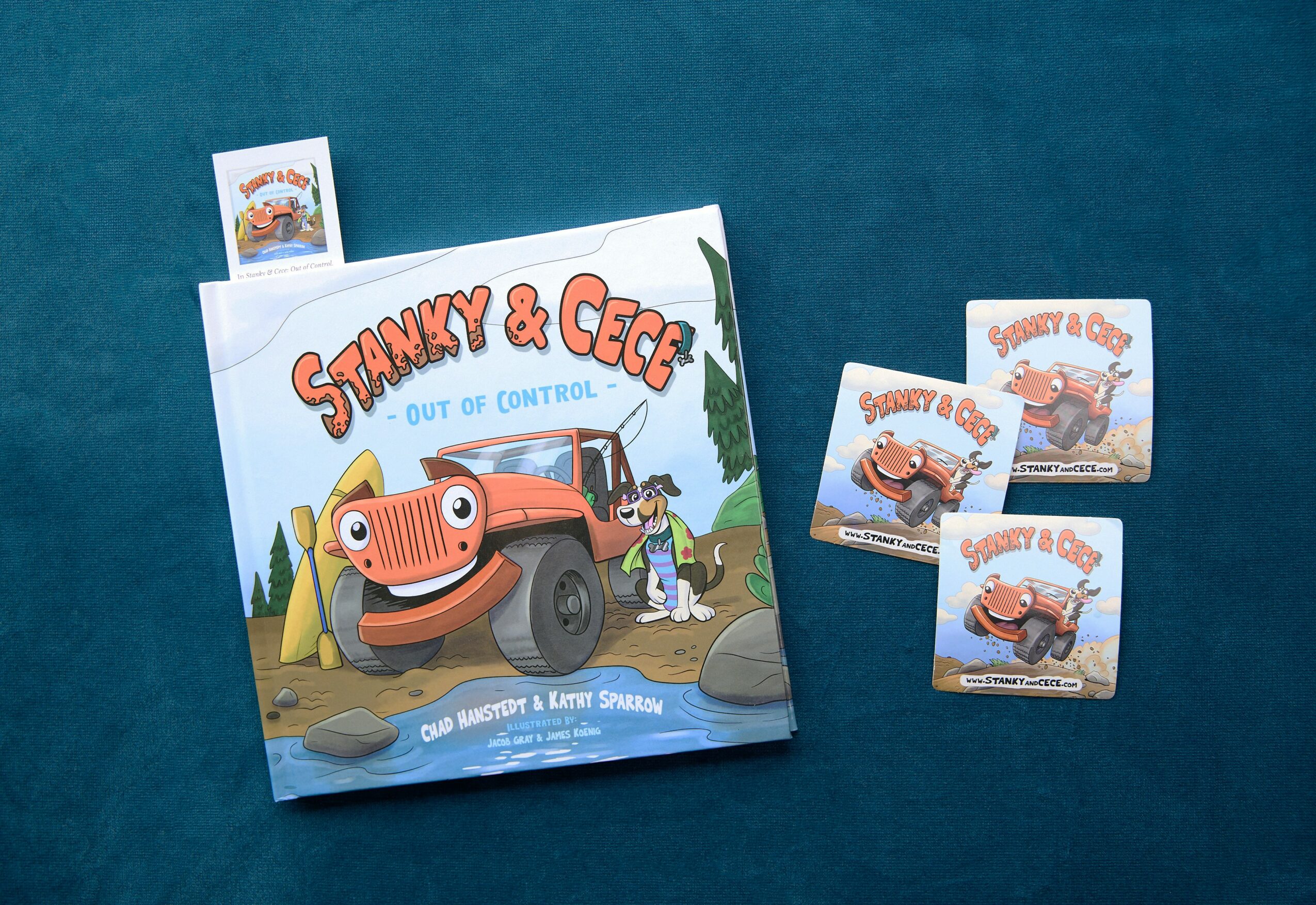

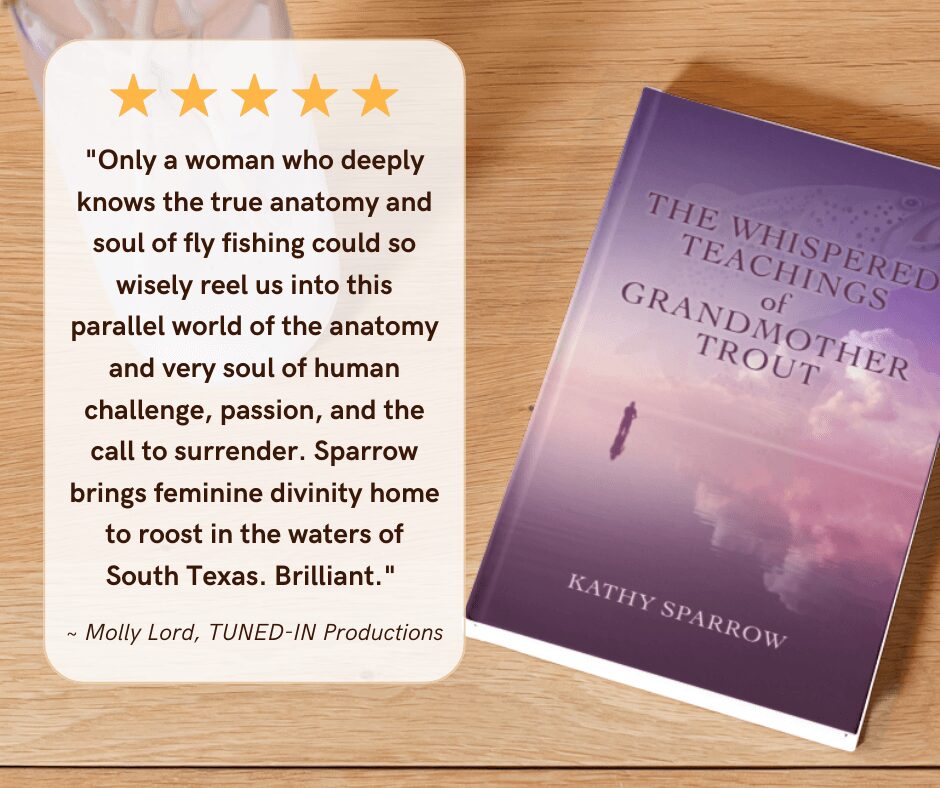
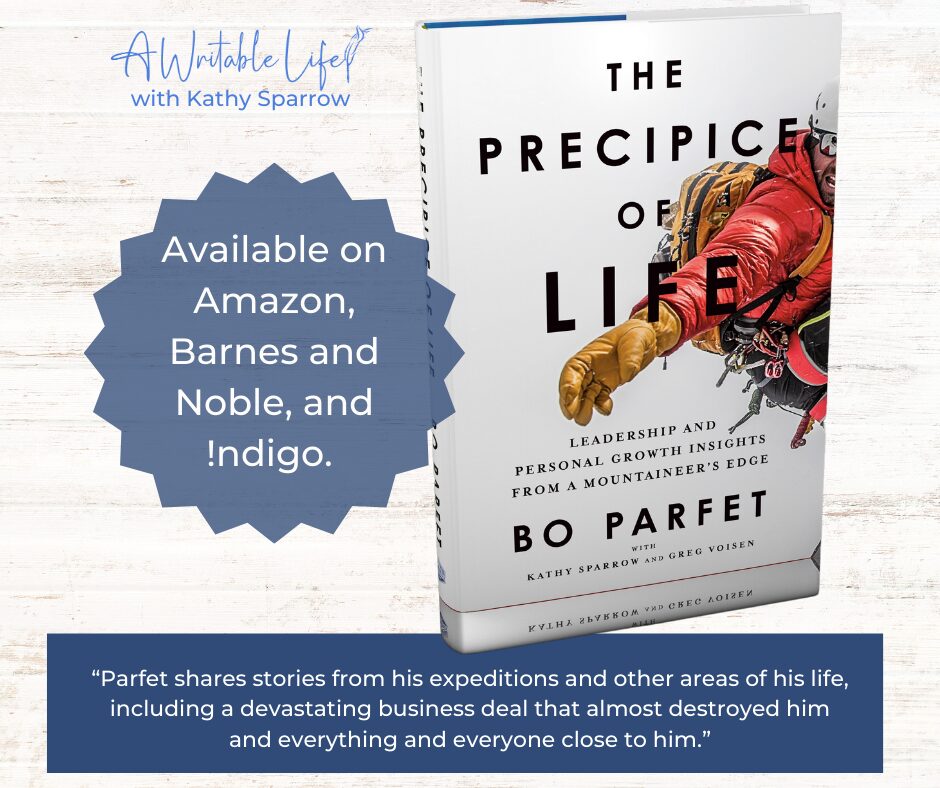
Image Credits
Photos by Karen Floyd Photography