




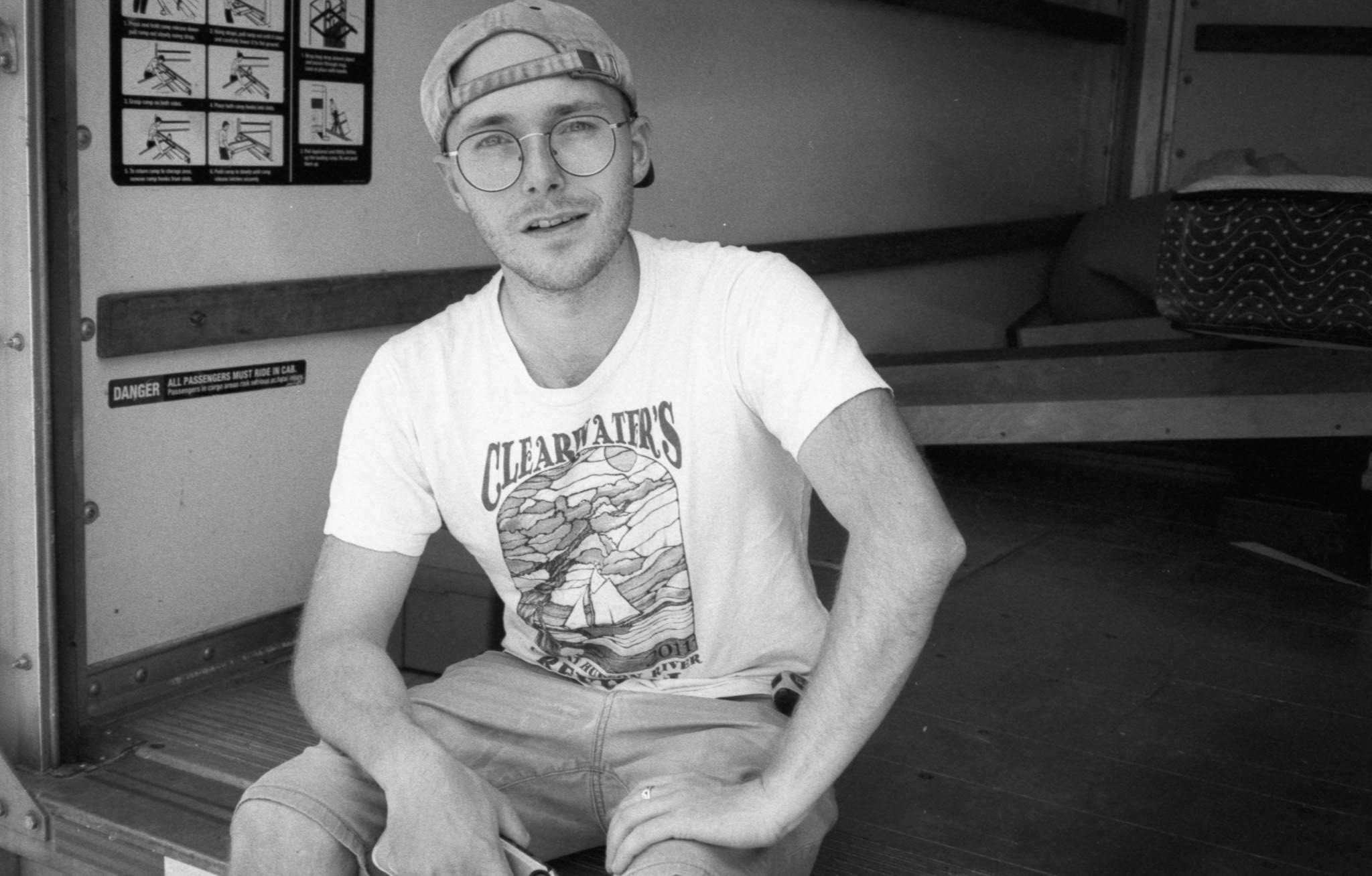
We’re looking forward to introducing you to Anthony DeFeo. Check out our conversation below.
Good morning Anthony, it’s such a great way to kick off the day – I think our readers will love hearing your stories, experiences and about how you think about life and work. Let’s jump right in? What are you most proud of building — that nobody sees?
One thing that has taken me a long while to get right is my system of organizing my sole proprietorship from the maintenance of my gear to the filing of my taxes each year. It’s a much more complicated web of equipment, paperwork, and networking than I imagined, and I don’t even have that much in comparison to some of the union designers, art directors and leadpeople I know.
I have all of my tools (my “kit”) pretty well organized, but that requires restocking of expendable items, maintenance of the tools themselves so they function properly at a moment’s notice, and generally knowing where everything is when I need it. Between jobs I have to be keeping this kit in good shape and fully stocked or I could show up to a set unprepared.
That part was obvious to me from the beginning, and it was easy. Second came networking and keeping up with my contacts. When I started out in Los Angeles, I had a regular habit of reaching out to industry contacts just to say hello and remind them that I exist with the hopes of being the right reminder at the right time to get hired. I’d respond to a lot of job offers and search through production staffing sites and groups with the same routine attention.
Five years on, I’ve gotten behind in this habit. I got used to working with small groups of the same people; as a whole, I was working with multiple employers, the natures of our projects varied, and ultimately the income streams each generated were unique as well. This system felt diversified and strong. But many of those employers slowed down at the same time, and I realized I should have been continuing the trend of seeking new work throughout that period. Working freelance, this is always necessary. While I’d done a lot right, keeping up this one good habit would have ensured that in times of lean work opportunities, I can keep going.
Nonetheless, the hardest part (at least at first) was keeping all my tax documents in order. For every job I am constantly onboarding and offboarding; on paper, I am hired and laid off on average thirty times a year. It’s chaotic. While some payroll services are utilized by multiple companies I work for, many projects I’m hired onto are invoice jobs, meaning I’m paid in full without tax deductions. Those companies all provide me with their own 1099s at the end of the tax year, and it was a paperwork nightmare for a few years.
I have finally gotten the hang of this, and this past tax season was a breeze. It’s still a mountain of deductions and other concerns: most jobs have mileage that I’m compensated for, but some don’t (and I have to record that separately); I have my own business expenses between jobs; I have to pay quarterly estimated taxes on my 1099 work to both the state and the federal government separately; I have my own health insurance, for which I receive assistance, and that factors in at tax time too.
Thankfully I’ve had a wonderful accountant who made me aware of all these things, along with friends in the industry who have been helpful and knowledgeable enough to give me advice when needed. I’m actually quite proud of how I’ve handled all of this so far. While I still need to tighten up on some aspects, I’ve learned some basic tenets of running a small business. It’s an education I didn’t expect to get but I’m very grateful to have under my belt.
Can you briefly introduce yourself and share what makes you or your brand unique?
Broadly speaking, I work in the art department for independent feature films, short films, commercials, music videos, and basically any visual media. That means I’m responsible in some way for providing, moving, shaping, setting and re-setting, cleaning, making safe, and often returning pretty much anything that lands in front of a camera lens. This excludes actors, their hair and makeup, their costumes, and, most of the time, light itself (though there is some overlap here).
Specifically, I often work as a set dresser, meaning I can do anything from bringing items to set in a truck to cleaning up water spilled onto a table by an actor before shooting another take. It can be very demanding and requires constant problem-solving, but that’s part of what I love about it. In the moment, on set, you have only your diddy bag with some assorted tools, the set and props in front of you, and, perhaps most importantly, an understanding of what the people around you do and how they could help. It’s a fantastic challenge, and it forces a focus and presence that I seek from some things I like to do in my free time, like hiking and camping.
When I have the opportunity, I work as an art director. In these cases, I essentially organize the circus of getting all these people, materials, and objects together to see the production designer’s vision to fruition. I find that on each project there is typically a new subject that I and my team have to become overnight experts on. While the pressures there are high, I often end a show with useful knowledge of something previously unknown to me.
Altogether: I learn new things and solve new puzzles at my job all the time. As someone who has a tendency to fall into routine, I find this very helpful in keeping my mind open to new experiences and my skills sharp.
Amazing, so let’s take a moment to go back in time. What’s a moment that really shaped how you see the world?
I read a book in middle school, I think when I was ten, about what kids can do to contribute to environmental stewardship. I’m pretty sure it was “50 Simple Things Kids Can Do To Save The Earth” by The Earth Works Group. This book encouraged me to do something about climate change on a personal level.
I was already outside a lot as a kid on eastern Long Island. At the time, I was a Cub Scout, and my parents often took me hiking, to the beach on Moriches Bay, fishing, and to the local aquarium. We went to the Clearwater Festival almost every summer, an event founded by folk singer and activist Pete Seeger that raised money to clean up the Hudson River. There were a lot of environmental activists there, and I could sign their petitions and take their pamphlets, but it felt like that was about it for a ten-year-old.
What I remember loving about this book was that it took a very big, global issue and made it manageable and approachable for kids especially (as the title suggests), but also for the average person. The actions in it were, of course, simple, and I started implementing them in my own life. Recycling became a much bigger focus at home and at school; I would even bring home my classmates’ paper scraps and recycle them. I showered with colder water. We started composting at home in our backyard.
This book ultimately taught me an immense lesson in consumerism. Many of the things that we have we don’t need; of those things, many of them could be reused or purchased in a used state rather than new. In fact, as I grew older, I realized just how much stuff there is out there in the world. At least in the U.S., from my personal experience there appears to be an abundance of furniture, clothing, and other articles that people just throw away.
Working in the art department, the evidence of this abundance of materials is more apparent than in other facets of filmmaking. Every project requires the acquisition and release of materials and objects. Many props and set dressing pieces are rented and returned to prop houses, which is fantastic. Many materials used for set construction, however, are destined for the dump. As budgets for media projects shrink (as they have in many cases over the last decade, according to both myself and friends who have worked in Los Angeles far longer than I), purchasing and returning items becomes more affordable than renting. This creates an immense excess of packaging, not to mention emissions from shipping.
I have a personal, inner conflict with this issue. I still stick to a lot of the tips laid out in “50 Simple Things,” but utilizing them at work can be tricky. I can only bring home and recycle so much stuff, and I only have so much of my personal set dressing and props to lend to a production looking to save some money.
While there are some set recycling services in Los Angeles, there’s a fantastic business in Glassell Park called EcoSet that does quite a bit to alleviate this issue. They take unwanted props, dressing, building materials, flooring, and packaging and put it in their “Materials Oasis.” If you’re a buyer or designer or anybody, really, looking to source “stuff” for a creative project, you can make a reservation with them to visit the Oasis for an hour and take as much as you can for free, depending on what’s there.
They service all projects, along with nonprofits and schools, and it’s an incredible setup and space they have. And if you can’t bring your unwanted materials and such to them, they’ll come pick it up. They also have an on-set trash separation service where they’ll bring clearly labeled garbage cans for recycling, landfill and compost to your production, along with aluminum water bottles instead of plastic. I utilize EcoSet any chance I get.
To this day, I’m very cautious about the things I do and their environmental impacts. I still compost, I make purchases with as little plastic packaging as possible, I bought a hybrid car, I reuse all my bags, and I buy most things used if I can. The book really drove home the “think globally, act locally” maxim, and I really believe in it. It’s idealistic to an extent, but if everybody, or even just most people, did the things listed in that book, we could be a much healthier global community. It gives me hope, really, and it still provides me with a way to participate in addressing what I consider to be the great crisis of our time.
What did suffering teach you that success never could?
I would say struggling, as in not getting what I wanted (either at all or immediately), is a more accurate description for me than suffering. I’ve been fortunate enough to have not necessarily suffered in my life, but I have struggled to get my footing and find a sense of community, especially whenever I’ve moved to a new city.
Los Angeles is the first place I’ve moved for work and not for school, and I wasn’t fully aware of the difficulties in finding social circles when I first got here. I was lucky enough to immediately move in with my college roommate, and I’ve made a lot of friends through the folks he knew when he moved here some time before me. I’m very grateful for and treasure these friends, and I’ve gotten close with many of them over the years.
Working freelance, you do meet a lot of people, but it’s often in sporadic jumps. It took a while before I became very close with any of my coworkers because our projects were often short-term and infrequent. It often required that I stay in touch with certain people over long periods of time without the excuse of work, which can be awkward to broach at first, but is something I’m sure most people encounter. I’m happy to say I have some very good friends from my job whom I love dearly and learn a lot from, too.
As time has gone on, I’ve realized I feel the need to branch out and find other sources of community involvement and connection. Last year I started doing some volunteer work in the autumn with Friends of the LA River and Surfrider, two nonprofits dedicated to environmental conservation. I finally caught the sense of belonging and place, the feeling of really being involved in my new home, that I had been looking for. It was easy to get involved; I just had to show up with a willingness to work a little and talk to the people around me. I’ve had a lot of fun with just a few events hosted by these organizations, and I plan to do a lot more.
If I had come to Los Angeles with a big network of family and friends awaiting me, I might not have been so encouraged to maintain friendships with folks I don’t see that often or to branch out and meet new people.
I think our readers would appreciate hearing more about your values and what you think matters in life and career, etc. So our next question is along those lines. What truths are so foundational in your life that you rarely articulate them?
As I’ve been saying already, a big foundational belief is certainly that we’re all responsible as stewards of the earth, and that if everybody did a little bit to chip in, we’d all be a lot better off. It’s not terribly difficult to make some minor sacrifices that could make a major difference in the long run. And anyway, climate change is, in fact, a major humanitarian crisis. Action, no matter how small, especially when combined with the actions of others, I think is a lot more powerful than most degrees of speech.
To the point of purely human concerns and collaboration: I think that in order to be a good filmmaker, you have to first be a good person. You have to be an active, caring member of the on-set community. Much of my job involves being aware of my surroundings, largely for the sake of safety, but also for collaboration. I have to be willing to work with people I’ve never met before, some with jobs I don’t entirely understand, in environments that are often unfamiliar. Your emotional guard has to be low enough to trust everybody around you, to some degree, almost immediately.
At the end of the day, a good project is really dependent on the people involved working together. Divisions of labor exist, and individual responsibility is very high on a film set. Nonetheless, you need to be willing and able to put yourself into a stranger’s shoes.
Thank you so much for all of your openness so far. Maybe we can close with a future oriented question. When do you feel most at peace?
I feel most at peace when I have nothing but the unregimented day ahead of me. It allows me to take each moment as it comes instead of plotting every variable of a potential problem well ahead of its possible existence, which I often have to do at work. Sometimes bringing a set together feels like landing a jet on an aircraft carrier, and I prefer to not do that on my days off.
On the other hand, I feel a similar kind of peace when I’m on set, believe it or not. Once we’re in the position where pre-production is complete, we have everything we need, and what we’re missing we’ll just have to improvise, I’m suddenly intensely focused. While my energy is up, I’m at a sort of elevated yet flat calm, like a plateau.
It’s an experience maybe best compared to surfing, which I sometimes do in my free time. While there’s a ton of energy required to get out past the break, once you’re there, it’s often incredibly peaceful. Similar energy is required to get into a wave, and when you pop up, the dialed-in focus of riding this moving ramp of water is both thrilling and calm-inducing. It’s a flow state.
If you’ve read this far, I actually wrote, produced, and directed a short film loosely based on my experience learning to surf. It’s called BUMMER, and it follows a college dropout named Casey who is, well, bummed about his life’s trajectory until his townie friends get him into the water. It’s a lot about waves, and it speaks mostly to the lessons I’ve learned from the ocean. You can check it out here:
I had the distinct pleasure of making this film with friends old and new, many of whom I met working as a production designer and art director on short films and music videos. I’m very proud of the work that everyone put into this project. As I alluded to earlier, community is everything, and I am forever grateful for mine.
Contact Info:
- Website: https://addefeo.com/
- Instagram: https://www.instagram.com/thedefeokid/ also at https://www.instagram.com/anthonydefeodesign/
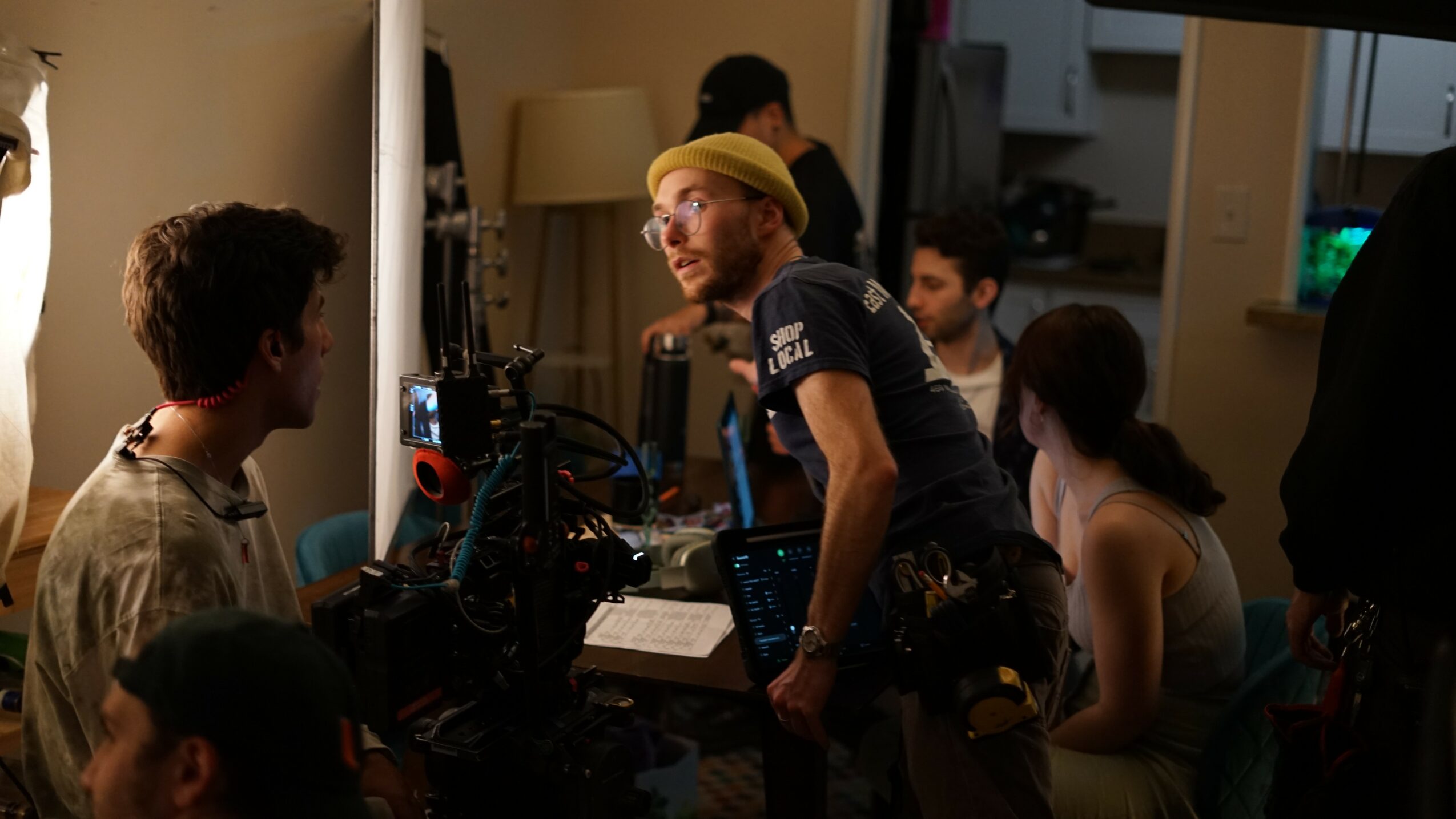

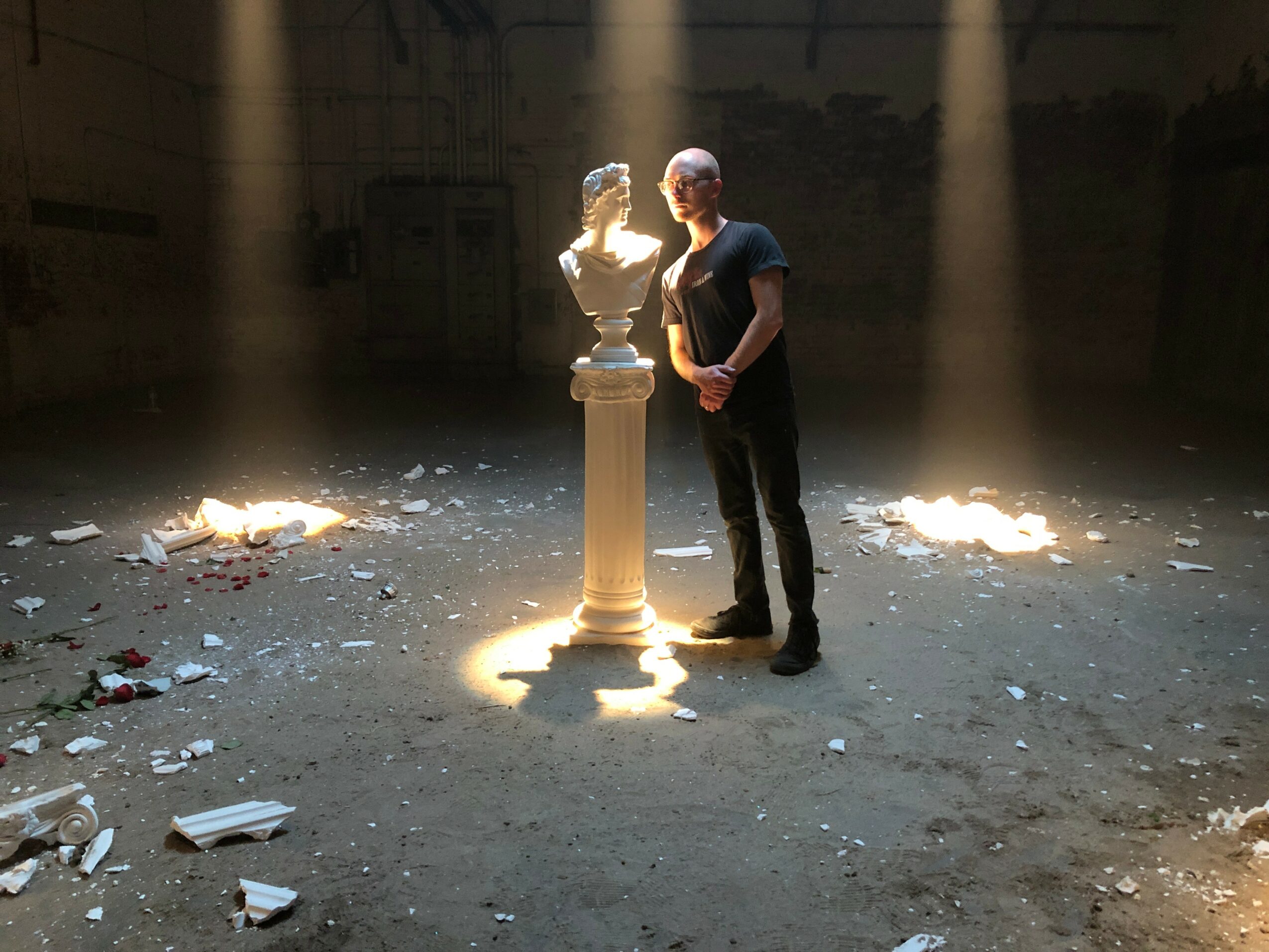

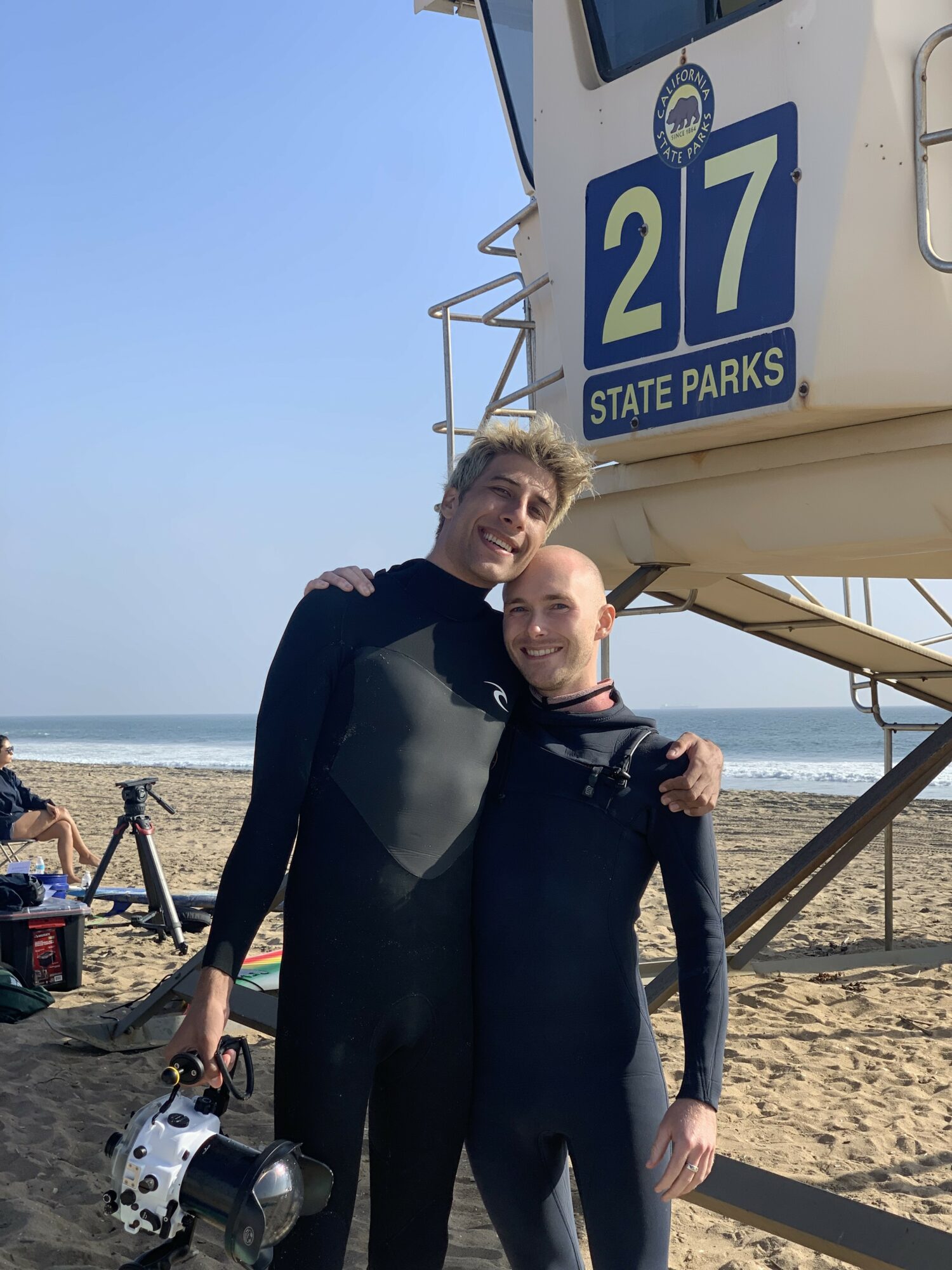
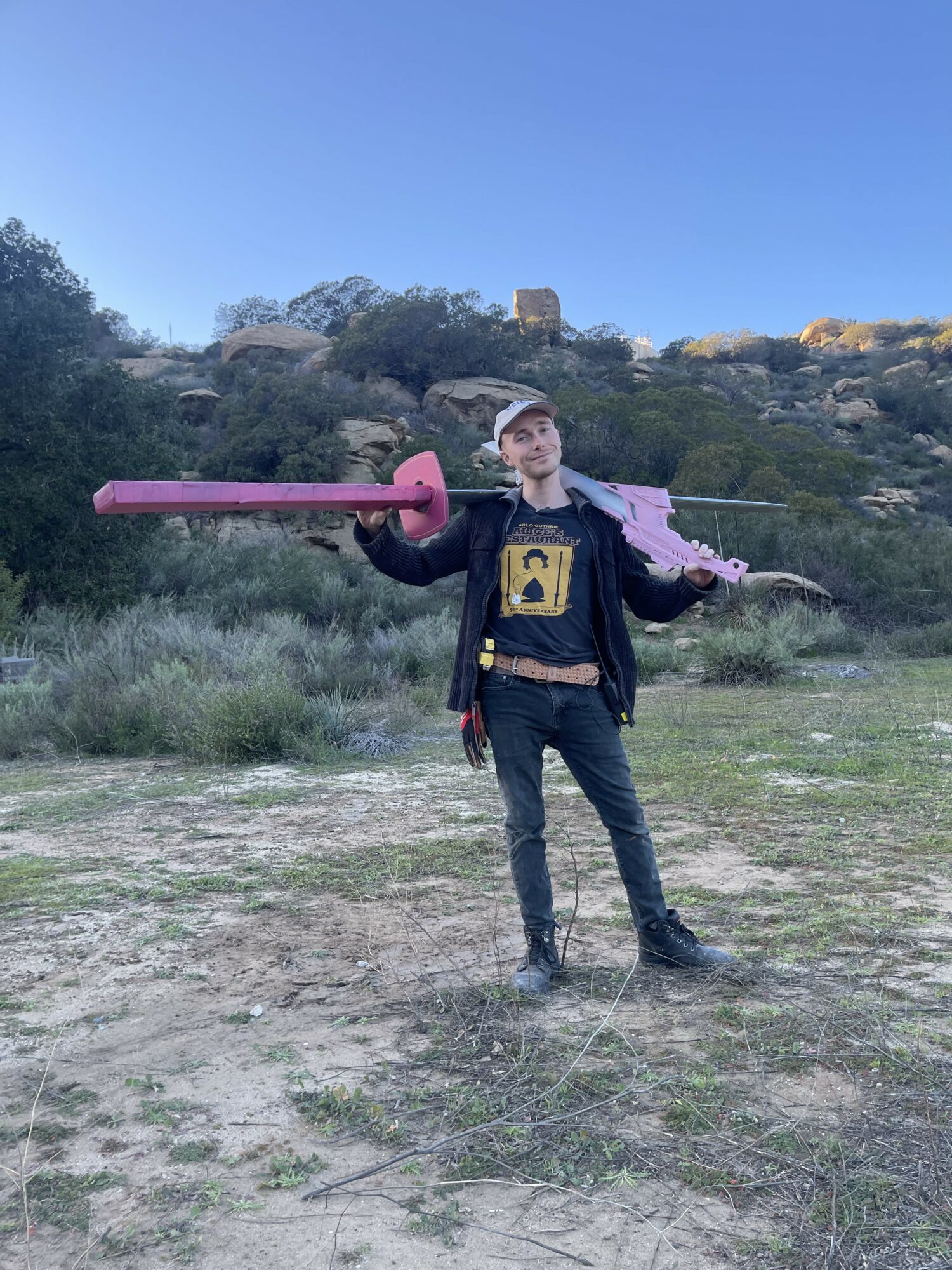

Image Credits
Cover Image: Morgan Dwyer.
Behind-the-scenes on Homewrecker: Nick Neira. Pictured (besides Anthony DeFeo, Production Designer): Ross Warr (Director of Photography, Producer); Reilly Anspaugh (Actor, as Megan); Daniel Rashid (Actor, as Liam); Danny Souza (1st Assistant Director); Donald Nam (Gaffer)
At the Great LA River Cleanup, Sepulveda Basin, 2024: Ross Warr
Behind-the-scenes on the music video “Are We Ridin” by ToBy: Millicent Starr
Still from the short film BUMMER: Director: Anthony DeFeo. Director of Photography: Ross Warr. Pictured: Havon Baraka as Casey
Behind-the-scenes on the short film BUMMER: Unknown. Pictured (besides Anthony DeFeo, Writer/Director): Ross Warr (Director of Photography); Paige Miller (Key Hair Stylist)
Behind-the-scenes on W Mag, The Directors Issue Feat. Jennifer Coolidge: David Duarte
Still from the short film BUMMER: Director: Anthony DeFeo. Director of Photography: Ross Warr. Pictured: Isa Vizcarra as Finn; Havon Baraka as Casey; Nick Samson as Brody
Popular
-

Portraits of the Valley
-

LA’s Most Inspiring Stories
-

Rick Norris Learned That Building a Successful Business Means Building a Life You Actually Want to Live
-
How Olivia Rush Turned Survival Into a Mission to Help Others Keep Going
-

How Bibi Goldstein Is Helping Entrepreneurs Reclaim Their Time by Embracing the Power of Delegation
-

Victoria Hasson is Redefining Voice Coaching Through Community and Collaboration


