




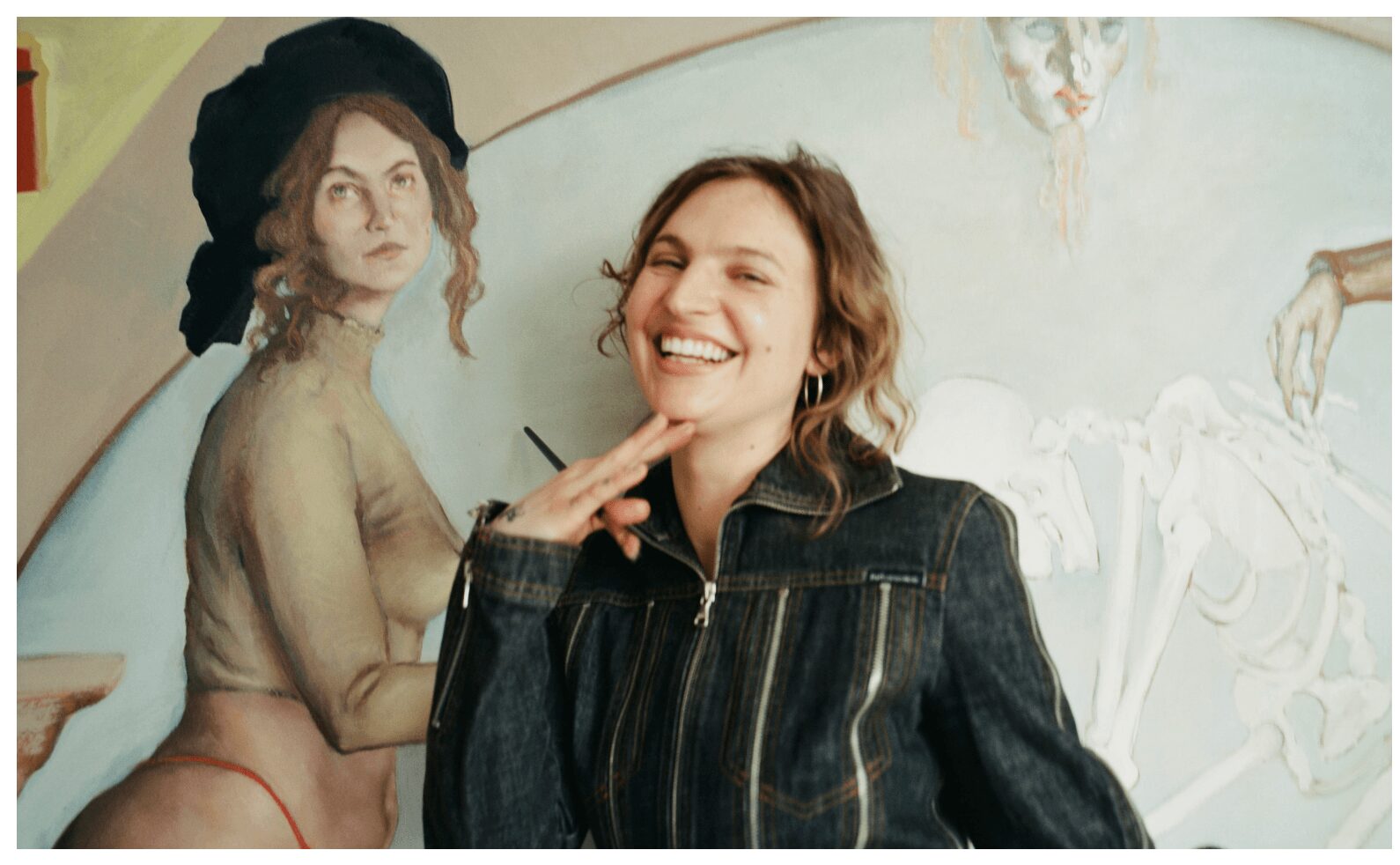
Today we’d like to introduce you to Ireland Wisdom.
Hi Ireland, so excited to have you on the platform. So before we get into questions about your work-life, maybe you can bring our readers up to speed on your story and how you got to where you are today?
I was born in Los Angeles in 1996, and grew up in Topanga with an artist father, so I was immersed early on in the possibilities of what art can offer. I trained classically at the Florence Academy of Art, where I spent three years in a rigorous atelier—learning to see through the eyes of the Old Masters by painting from life. I’ve been able to keep this practice alive ever since; I still paint from life religiously. There’s something about the battle of it—the model shifting, the light changing—that makes the work feel alive. My paintings breathe because the moment never stands still.
I’ve always felt that we’re living inside the imagination of history. We’re in the 21st century, yet we’re dragging thousands of years of painting behind us. When I returned to Los Angeles after my years in Florence, I found myself living on the Zorthian Ranch—a 57-acre artist ranch with over 70 years of history, some of which even loops back into my own family story. My baptism was essentially a performance piece: after the Blessing of the Animals on Olvera Street, a band of LA artists rejoined at Llyn Foulkes’ Church of Art studio at the Brewery, where my baby sister and I were baptized with Jirayr Zorthian’s goat and chicken. Twenty years later, I befriended Zorthian’s granddaughters and was hosting figure drawing sessions in the barn he built.
I see my work as a kind of collusion of time. I fold old values, ancient iconography, and classical technique into the present to create a world where multiple eras coexist and new values can form. Velázquez, Botticelli, Artemisia Gentileschi—all those European masters are in my Italian bloodstream, but their language becomes something new when filtered through my own experiences. In my paintings I find that it’s a way of immortalizing my memories.
I’ve had solo exhibitions at Carlye Packer in Los Angeles, The Bowlish House in Somerset, the Kontemporary Residency in Seoul, the Breeder Gallery in Athens, and on Canal Street in New York. My work has also been included in group exhibitions at Los Angeles Felix Art Fair, Frieze London, Maison Lune, Eastern Projects, Bergamot Station Track 16, Hannah Sloane, Ernie Wolfe Gallery, Melange in Paris, and KIAF in Seoul.
Ultimately, I paint because it’s how I think, process, remember, and communicate. And I paint for others like me—people who hunger for figurative work, for myth-making, for stories, for feminine power, and for a little cheeky laugh. I paint for the girlies.
Can you talk to us a bit about the challenges and lessons you’ve learned along the way. Looking back would you say it’s been easy or smooth in retrospect?
One of my biggest challenges has been confronting the gaps in the history I was trained in. After graduating from the Florence Academy, I came back to Los Angeles realizing that three years of art history lectures barely mentioned a single woman painter—even though we were living in the same city Artemisia Gentileschi once was painting master pieces in. That absence felt loud. I knew I wanted to use paint to combine technical rigor with irreverence, myth, and play.
Another challenge is the lineage itself. Figure painting seemed to fade right as women were finally stepping into it. I often imagine what might have happened if artists like Marina Abramović had stayed with paint. That sense of a disrupted lineage motivates me, but it can also feel like painting into a void.
And then there’s my own internal pressure. My biggest critic is myself. I expect both rigor and tenderness from my work—pushing further while honoring where I am. That tension is challenging, but it’s also where I grow. My inner critic is relentless, but it’s the voice that keeps shaping the work I haven’t yet made.
As you know, we’re big fans of you and your work. For our readers who might not be as familiar what can you tell them about what you do?
Two pieces that really capture the heart of my practice are The Snake Charmer and Freaky Wisdom.
The Snake Charmer began with my obsession with the drama of light, shadow, and sound in Sargent’s El Jaleo. I wanted to create a painting that carried that same sense of movement and rhythm — something that almost vibrated with sound. I asked my muse Kyla to be my snake, and she said, “I’m so happy you see me as the creature I am.” Her patent thigh-high boot arcs across the canvas like a striking serpent, mirrored by the smaller snakes slipping from the fingers. Around her, the music unfolds: Shanti played the electric cello live while sitting for me; Shelly, cross-legged with her violin, hummed with energy from both her eyes and chest; Cheyanne glowed with her flute; and Aslan was acrobatic with the harp.
The space is shallow and theatrical, pulsing with rhythm. A restrained palette of nudes and neutrals, anchored by sharp black accents, gives the figures dimensionality while keeping the atmosphere intimate. I paired the painting with a poem by Saoirse McGurrin — a gesture toward duality, where painting and poetry, music and myth all hold hands within one frame.
As for my self-portrait, Freaky Wisdom is iconic for a different reason — it was the first time I painted myself life-size. In the portrait, I face away from the viewer, a perspective achieved by painting myself while glancing into a mirror behind me. In the portrait I hold my oversized palette like a shield, my Edwardian kitten heels barely fitting as I stand in fourth position. I wear fragments of my own history: a hat of trash from the Pasadena Doo Dah Parade, a papier-mâché bunny mask made for the group show Heart of Lilith, and a gown of blue and chartreuse chiffon trimmed in gold from my local costume store.
While painting, I kept asking: How do I see myself? How do others see me? How do I want to be seen? Inspired in part by Dorothea Tanning’s Birthday, the piece is both playful and confrontational — mooning the art world while quietly observing it. It’s aesthetically accurate, absurd, armored, and unafraid.
Together, these two works show the range of my practice — from orchestrating theatrical, collaborative scenes to introspective self-mythologizing. They’re both rooted in classical technique, but unabashedly contemporary in spirit.
Is there something surprising that you feel even people who know you might not know about?
Something surprising is that even though people always ask what I’m listening to while I paint, it’s rarely a playlist or a song — it’s one album on loop. Madonna’s Ray of Light has always felt like a mirror to me. It balances vulnerability and power, chaos and transcendence, which is exactly how I feel when I’m painting. I love pop music, but that album in particular feels like it vibrates at the same frequency as my studio.
Contact Info:
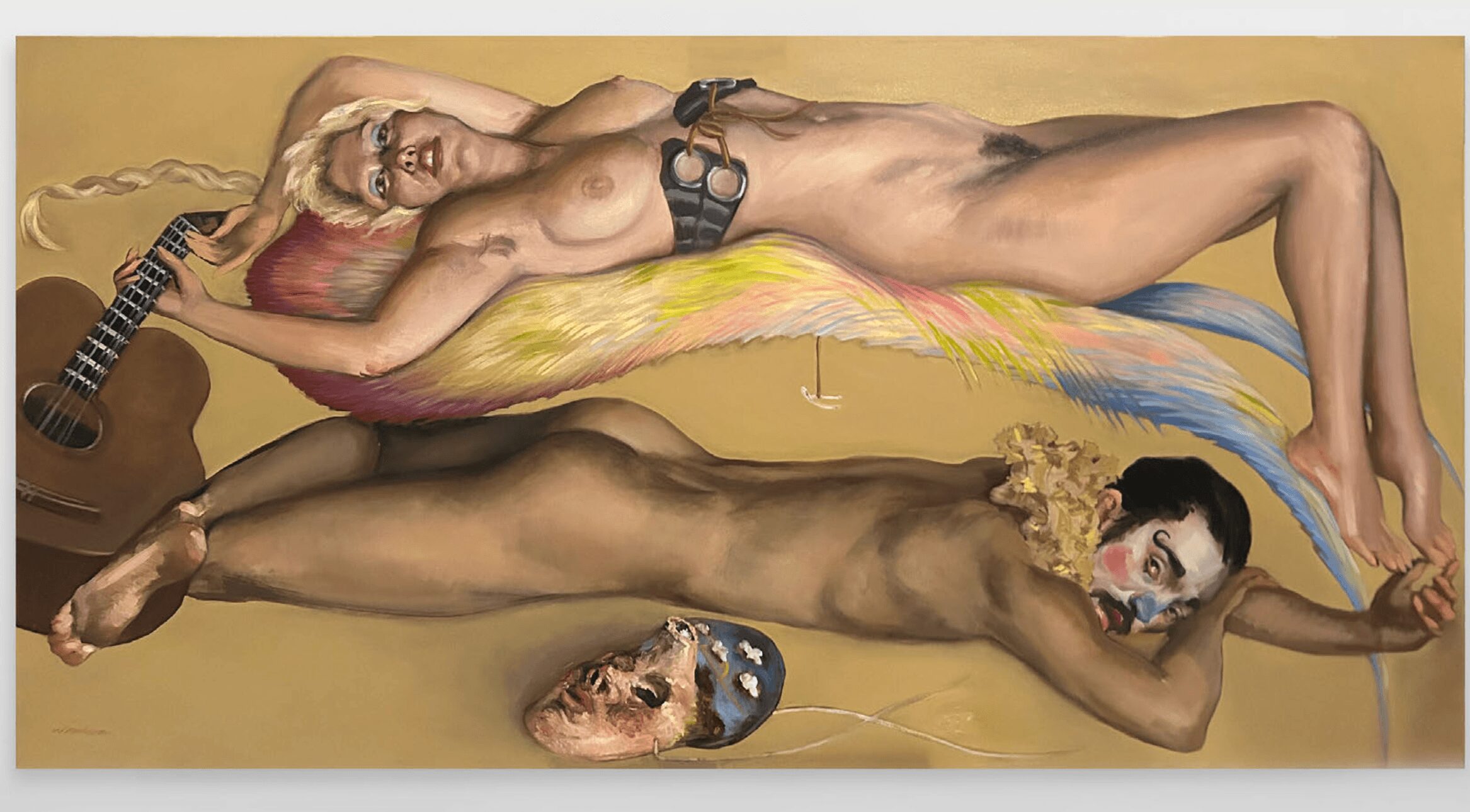
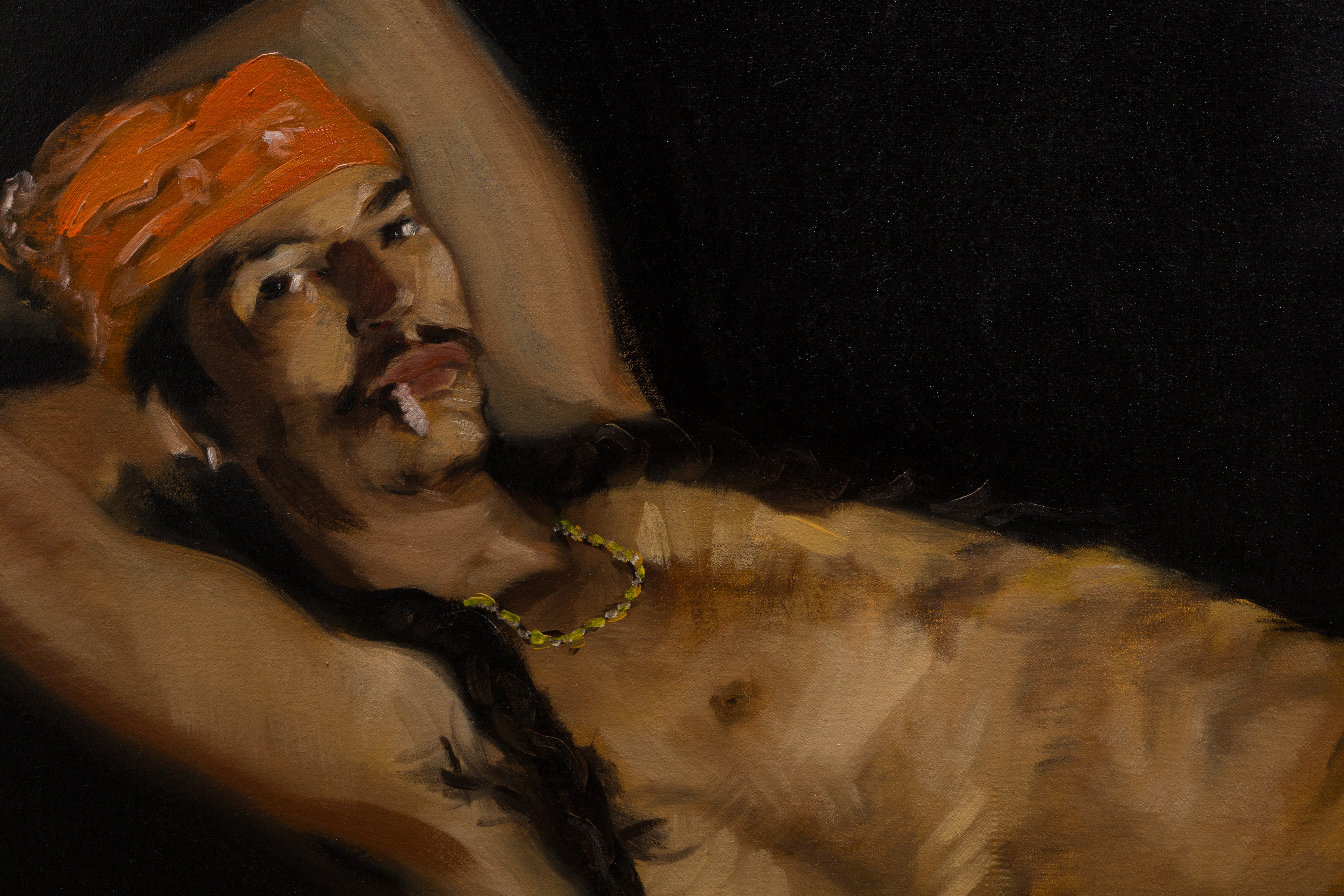
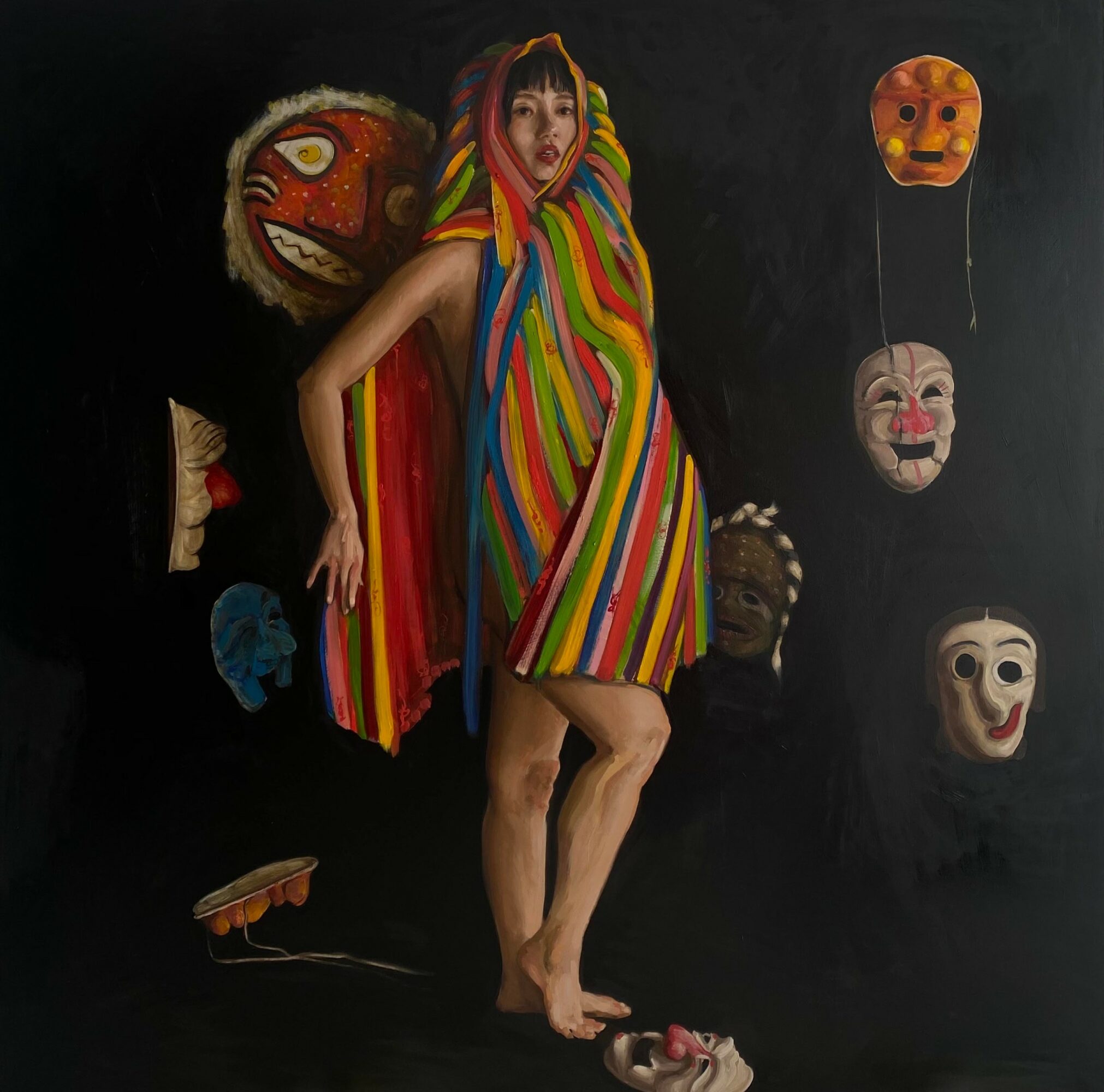
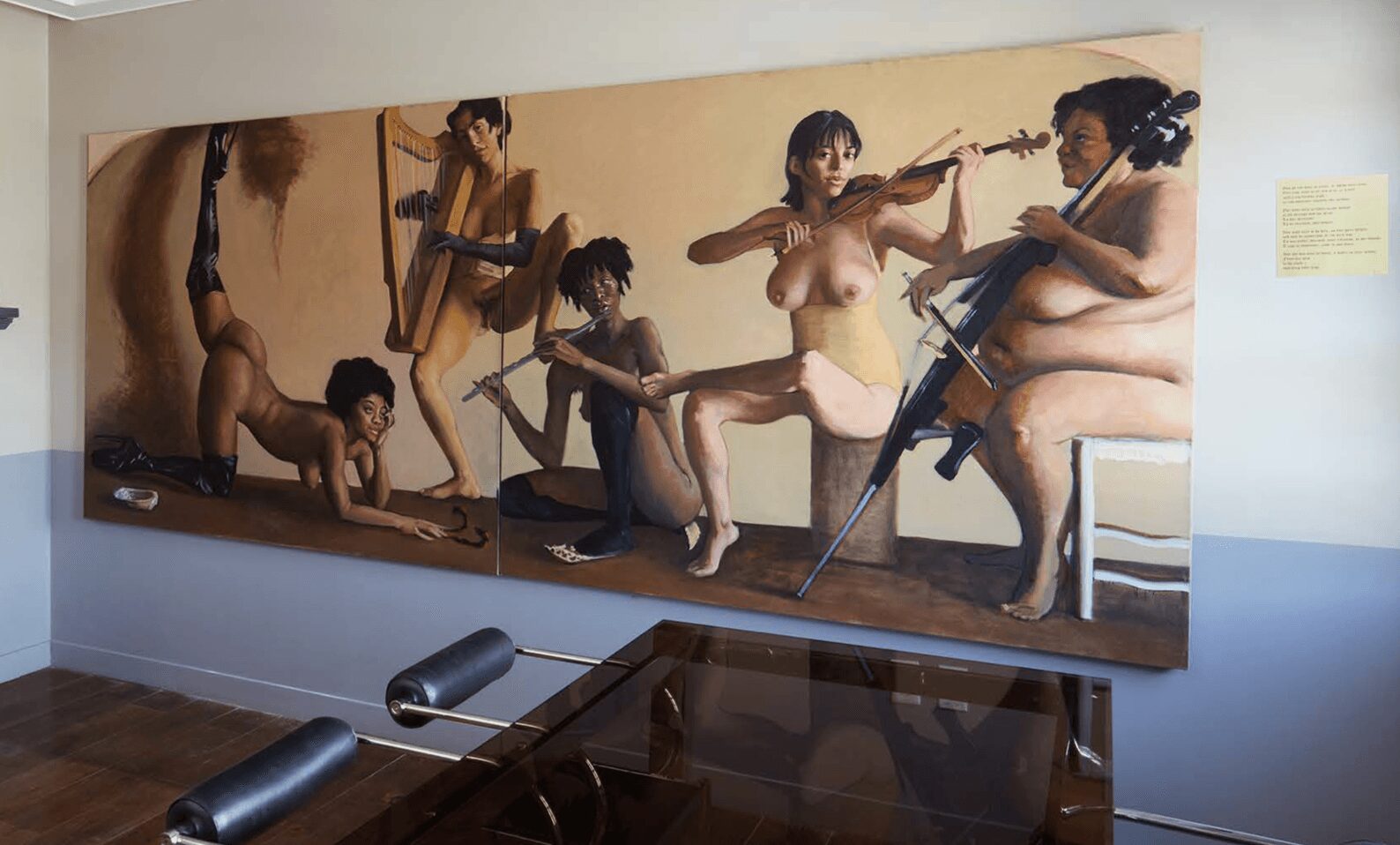
Image Credits
Austin Sandhaus
www.austinsandhaus.com
Popular
-

Que Johnson on Building Brands That Last: From Visibility to True Market Authority
-

Christina Wren Steps Into the Director’s Chair to Tell Stories That Feel Like Home
-

Portraits of the Valley
-

LA’s Most Inspiring Stories
-

JordanL on ‘Breathe,’ Belief, and Building a Movement Beyond the Music
-
Megan Birney Rudert on How Access to Light Is Powering a More Sustainable and Equitable Future


