




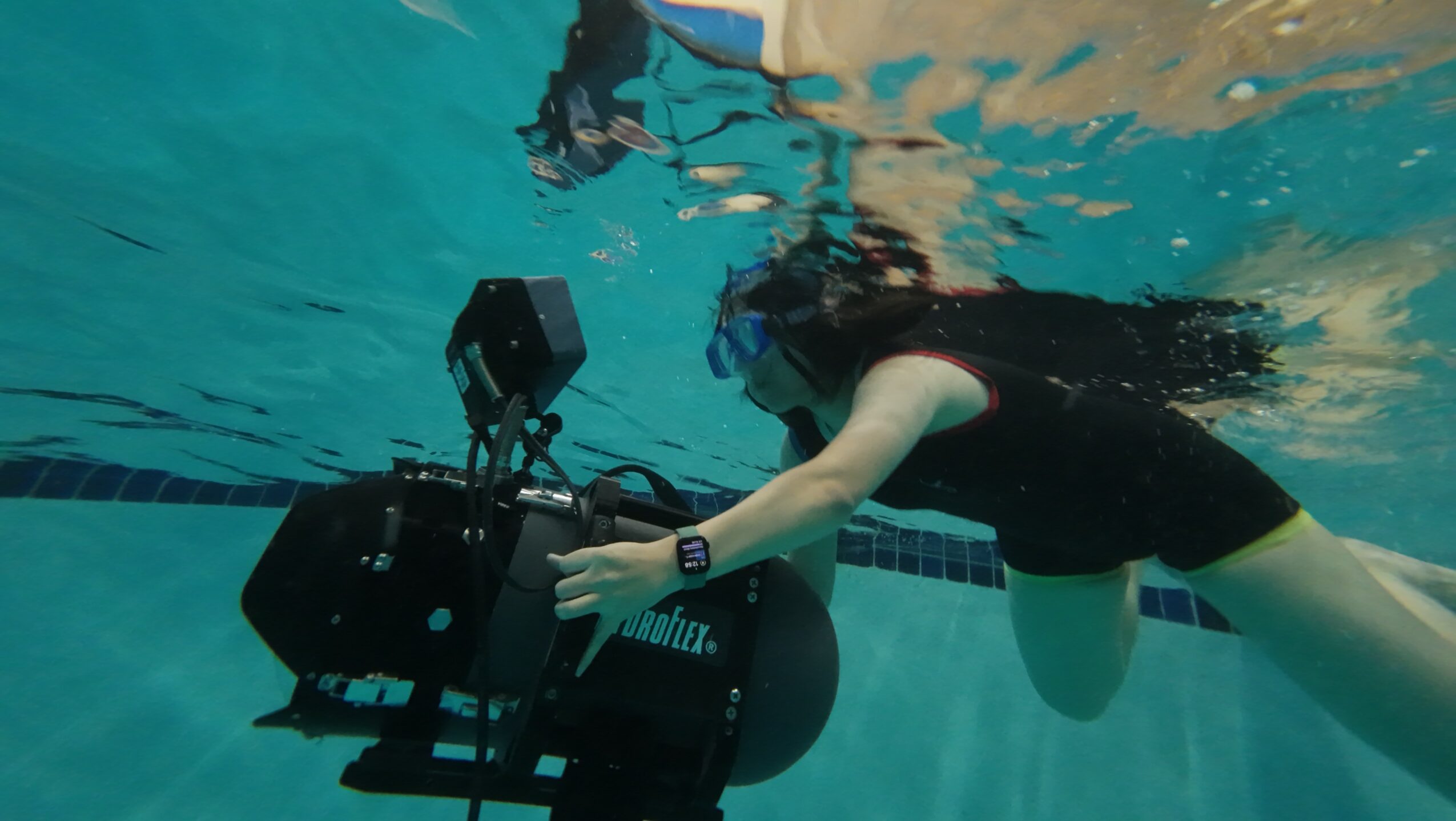
Today we’d like to introduce you to Lusha Li.
Hi Lusha, it’s an honor to have you on the platform. Thanks for taking the time to share your story with us – to start maybe you can share some of your backstory with our readers?
In 2022, I was carrying a big cardboard box out of my apartment when an elderly woman suddenly asked if she could have it. I was startled. I panicked and said no, thinking she had been watching me. Later, I discovered she lived on the same floor. Her home was spotless, yet filled with neatly stacked recyclables.
What startled me wasn’t her request. It was how quickly fear rose up in me.
As a woman living alone, I’ve learned to treat any unexpected interaction as a potential threat, something many men never have to think about. That moment made me realize how much silent caution shapes the way women move through the world, and I eventually wrote and DP’d a short film inspired by it called The Hallway.
Working on The Hallway brought back my earliest memories of creating stories and images. In elementary school, I was obsessed with Hong Kong period dramas and read millions of words of classic Chinese martial-arts epics. I even wrote and updated my own martial-arts stories in class and later online. After I got my first camcorder, I started recording everything around me. All these experiences eventually led me to film school in the United States, where I earned my cinematography degree.
Would you say it’s been a smooth road, and if not what are some of the biggest challenges you’ve faced along the way?
Every step I’ve taken toward cinematography has carried a feeling of “moving forward while constantly testing my footing in uncertainty.”
I’ve always been drawn to subjects that are difficult to film.
In 2024, I came across a news report from China that listed more than 30,000 unmarried men aged 35–55 as a “social issue” the local government needed to “solve.” What shocked me wasn’t matchmaking itself, but the idea that women were being treated as a resource to be allocated, rather than individuals with their own freedom, desires, and lives. The logic felt disturbingly feudal, reducing women to demographic solutions, and that absurdity became the seed of The Tale of a Village.
I wrote the first draft of The Tale of a Village based on this. In that world, the number of boys born in a remote village drops sharply, and the authorities in the village force all unmarried girls into a convent to control their free will and marriage choices. This film eventually became my MFA cinematography thesis.
In the U.S., students are always taught not to touch period films because they cost several times more than typical short films. During pre-production, my professors repeatedly suggested changing the story to a modern setting. But I believed the satire only worked if it was set in a feudal-like era.
So I insisted on filming “rainy Ireland” under the perfectly sunny sky of Los Angeles, casting actors with Irish looks and accents in LA, and building sets and costumes that matched the historical context, all on a micro-budget. But these “difficulties” ultimately helped me develop my own creative methods.
Fortunately, many people were drawn to the story:
• Emmy-nominated Set Decorator and Production Designer Nya Patrinos, and Art Director Sahara Staicu (IATSE Local 44)
• Costume Designer Sonia Nava (Costume Designers Guild), who specializes in period work
• Producer Valentina Chang, whose experience spans HBO Max, PBS, and festival-recognized indie features
• My co-DP, Yucong Li, with whom I also served as DP and camera operator on Forever After in Love (LA Shorts premiere)
The hardest part isn’t the making.
It’s making others believe your vision is worth making.
Appreciate you sharing that. What else should we know about what you do?
Period films give me greater creative freedom and more room for stylistic exploration in cinematography. I’m drawn to vintage color palettes, and I use color and light to build textured historical atmospheres. My work is character-driven, tied to social contexts, and often requires strong visual worldbuilding—something I’m deeply passionate about.
The Tale of a Village — Co-Director of Photography
A 1920s Ireland period drama inspired by real historical events, following a young woman resisting religious authority in her pursuit of justice and compassion.
Forever After in Love — Camera Operator
(LA Shorts International Film Festival 2025, Official Selection)
A surreal comedy exploring the longing for love beneath modern social masks.
Shadows in Smoke — Director of Photography
(WorldFest-Houston International Film Festival 2025, Finalist)
A 1950s American thriller about the final moments before a female agent’s capture, built through controlled lighting and sound design.
Regeneration: A Women and Climate Story — Assistant Camera
I worked on the camera team led by SXSW award-winning and Tribeca-premiere filmmaker Angelique Molina on this short documentary profiling women rebuilding their lives in the aftermath of the Palisades and Eaton wildfires, exploring gender, socioeconomic inequality, and climate resilience in Southern California.
My work centers on period drama, allegorical or metaphorical narratives, socially rooted character stories, and visually crafted worlds.
We’d be interested to hear your thoughts on luck and what role, if any, you feel it’s played for you?
Luck exists, but it usually only brings certain people to your path.
What truly makes a collaboration happen are the stories you share and the persistence you bring.
Luck may have introduced me to some people, but commitment is what kept them around.
A project like The Tale of a Village attracting professional designers, costumers, and SFX artists certainly involved a bit of luck. It’s rare for a student project to encounter such a mature team.
But without a ready script, a clear visual book, and a fully built world, luck alone wouldn’t have convinced them to invest their time and energy.
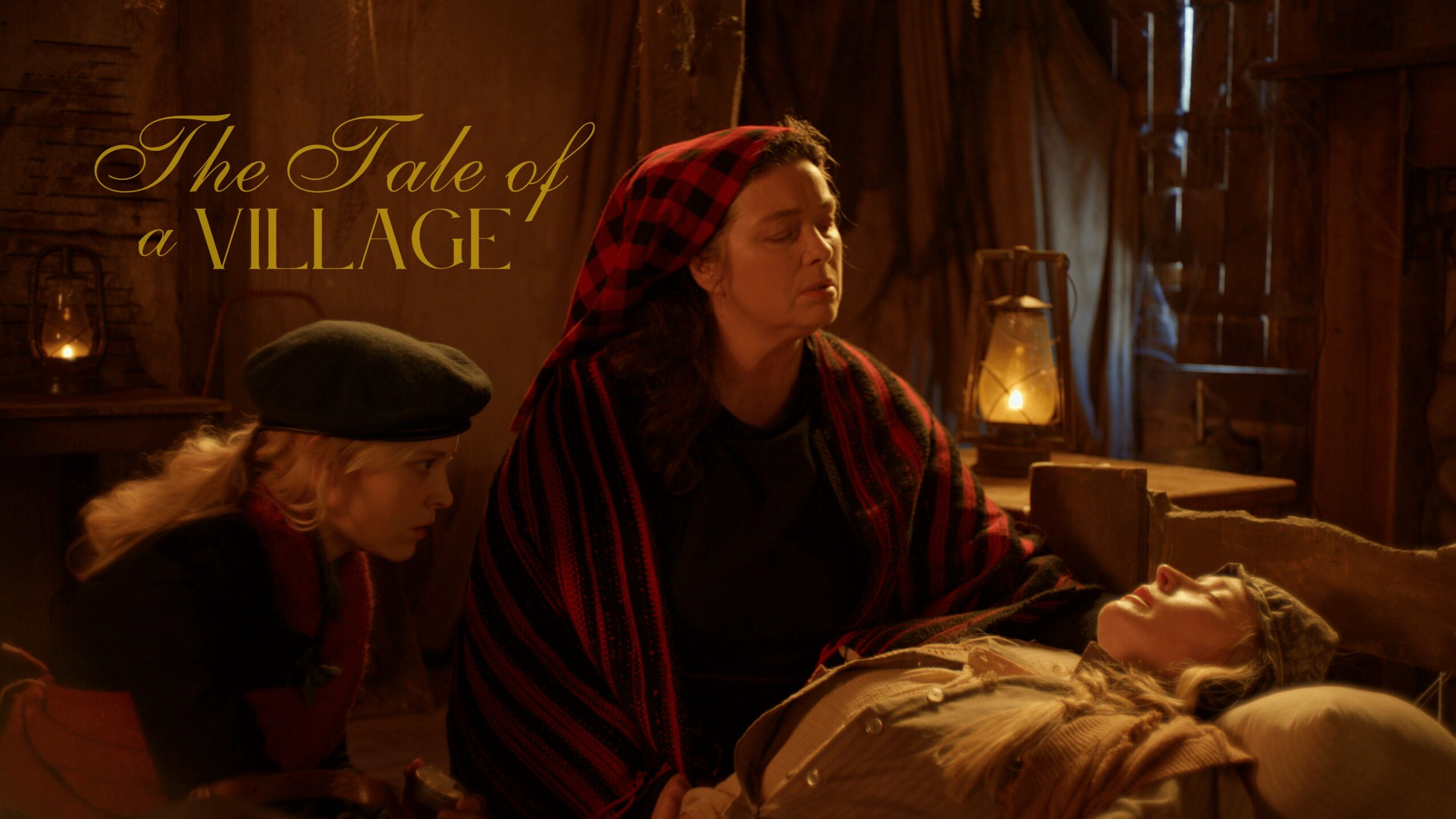
Image Credits
Photographer of underwater image: Xincong Zhao
Popular
-

What is the story you hope people tell about you when you’re gone?
-

Who were you before the world told you who you had to be?
-

Was there ever a time you almost gave up?
-

What is something outside of work that is bringing you joy lately?
-

Who saw you clearly before you could see yourself?
-

What are the biggest lies your industry tells itself?


