




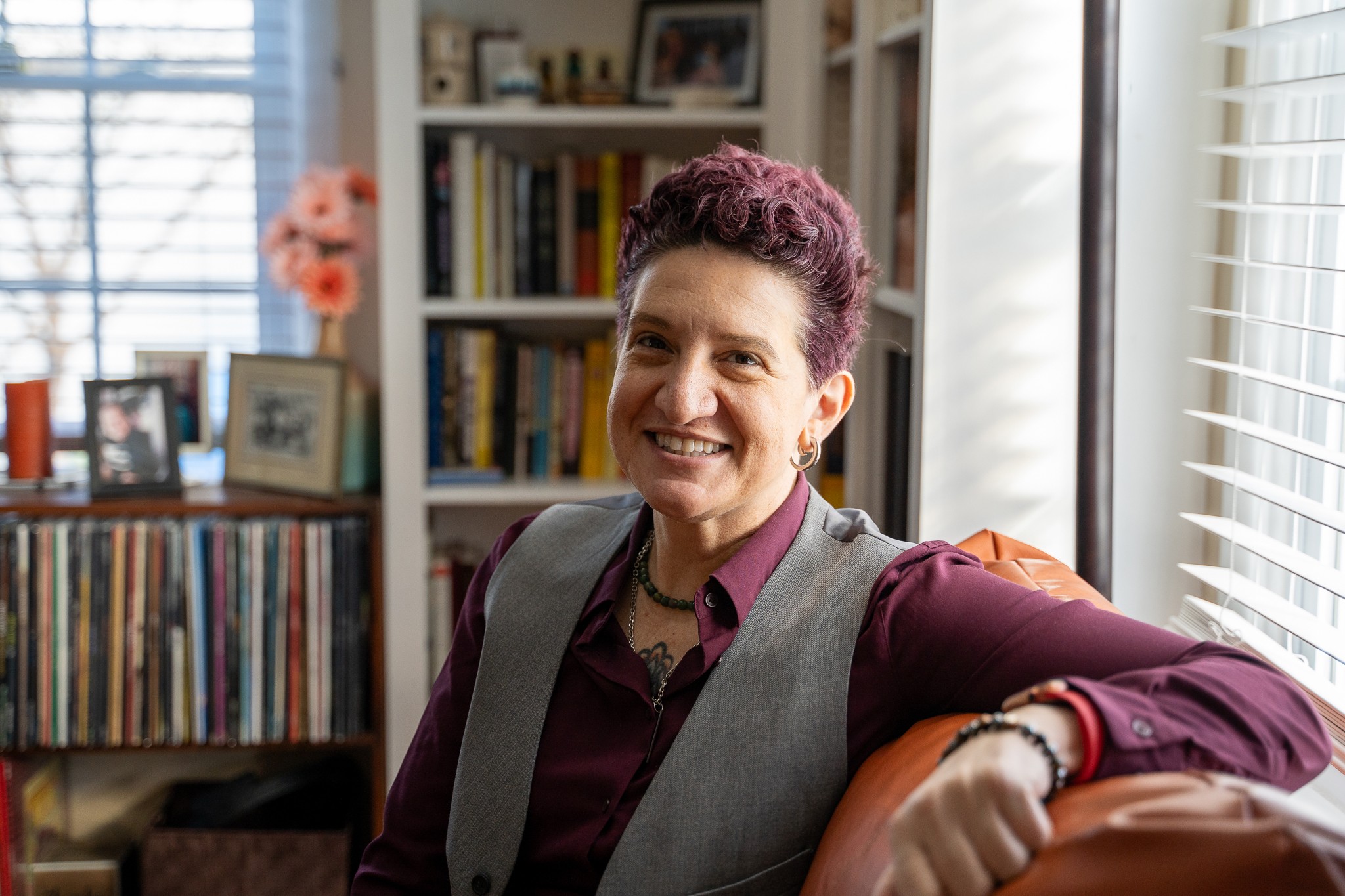
Today we’d like to introduce you to Ann Russo.
Hi Ann, we’re thrilled to have a chance to learn your story today. So, before we get into specifics, maybe you can briefly walk us through how you got to where you are today?
I started AMR Therapy after years of moving through my own life experiences — loss, identity shifts, career changes. I saw how much people need spaces that actually meet them where they are, especially when they don’t fit the mold. AMR began in Nevada in the early 2010s, and we expanded into California in 2018. Since then, we’ve grown into a team of 15 trauma-informed, queer-affirming, sex-positive therapists. We’ve worked with over 2,000 people and built a practice that I’m proud of. It’s a place where people feel seen, respected, and supported.
My own background includes growing up in a nontraditional family, shifting careers, and navigating deep personal grief. These experiences have shaped how I show up in the work. I’m a licensed psychotherapist with a strong focus on trauma, identity, and grief. Outside of AMR, my personal specialty focuses on working with religious trauma, polyamory, and queer identity. These are areas I’ve been connected to for a long time, both professionally and personally, and I approach them with care, clarity, and curiosity.
I’m also writing a book on religious trauma with PESI Publishing. It brings together my clinical work and lived experience, and introduces the Religious Trauma Treatment Model. The model offers a clear, narrative-first framework to understand how inherited belief systems shape the nervous system and impact self-trust. It’s designed to support both survivors and clinicians doing this work.
Whether it’s through AMR, my individual practice, or the book, my focus is on helping people reconnect with themselves. Not by asking them to become someone else, but by making space for who they’ve always been.
We all face challenges, but looking back would you describe it as a relatively smooth road?
Definitely not. This work matters, but it’s not easy. Mental health care keeps shifting, and we’ve had to adapt through major changes like COVID, ongoing cultural shifts, and an increasingly hostile political climate. We work with people who are often marginalized: queer, trans, BIPOC, neurodivergent, and survivors of trauma. Building a space that is safe, affirming, and accessible takes constant, deliberate effort.
Running a practice that’s rooted in values also comes with financial challenges. We operate on a sliding scale and are committed to keeping therapy affordable. But making that sustainable takes a lot of creativity, flexibility, and intention. It’s a constant balancing act between ethics and logistics.
At the same time, I’ve been writing a book on religious trauma with PESI Publishing. It’s work I care deeply about, but like everything else, it requires real time and energy. The book brings together years of clinical practice and lived experience. Writing it has meant translating complex ideas into something that’s useful for both survivors and clinicians. It’s meaningful work, but it’s also heavy, and it takes a toll.
So no, it hasn’t been smooth. But I didn’t expect it to be. We’re doing something real. And real work is rarely easy.
Thanks – so what else should our readers know about AMR Therapy?
AMR Therapy is a mental health practice built for people who are often left out of traditional therapy spaces. We are queer-affirming, sex-positive, trauma-informed, and committed to creating care that is honest, inclusive, and grounded in real life.
We support clients working through trauma, identity exploration, grief, relationship dynamics, religious trauma, and more. We also hold space for people navigating queer identity, polyamory, neurodivergence, political stress, and experiences that don’t always fit into mainstream therapy models. Our clients include BIPOC folks, LGBTQIA+ communities, and people who have often felt unseen in other systems.
Our team is remote across California and Nevada, which helps us serve people with limited access to care. We work on a sliding scale because therapy should be accessible, not a luxury. We are a diverse group of therapists who genuinely care about our clients. Every therapist on our team brings something unique, but we all share a deep commitment to showing up with respect, compassion, and curiosity.
What sets us apart is the way we do the work. We don’t push quick fixes or surface-level advice. We build relationships, hold space, and help people come back to themselves in a way that feels sustainable and real.
Are there any apps, books, podcasts, blogs or other resources you think our readers should check out?
I’m always reading, listening, and learning. I wouldn’t say I have one go-to resource, but I tend to gravitate toward things that explore polyamory, religious trauma, and LGBTQ+ politics. I like content that challenges me to think in new ways and helps me keep growing, both personally and professionally.
Some books and podcasts I’ve appreciated include Polysecure by Jessica Fern, The Body Keeps the Score by Bessel van der Kolk, and the Queer Theology podcast. I also follow writers and creators who speak to lived experience, especially around intersectional identity, mental health, and collective care.
There’s always something new to take in. For me, staying curious is the key.
Pricing:
- Sliding Scale starting at $80
Contact Info:
- Website: https://amrtherapy.com
- Facebook: https://www.facebook.com/amrtherapy/
- LinkedIn: https://www.linkedin.com/in/annrussolcsw
- Other: https://annrusso.org

Popular
-

LA’s Most Inspiring Stories
-

Portraits of the Valley
-

Rick Norris Learned That Building a Successful Business Means Building a Life You Actually Want to Live
-

How Olivia Rush Turned Survival Into a Mission to Help Others Keep Going
-

How Bibi Goldstein Is Helping Entrepreneurs Reclaim Their Time by Embracing the Power of Delegation
-

Victoria Hasson is Redefining Voice Coaching Through Community and Collaboration


